
Badrinath sits at about 3,100 meters (10,170 ft) above sea level in Uttarakhand’s Garhwal Himalayas and is one of Hinduism’s most revere
Badrinath sits at about 3,100 meters (10,170 ft) above sea level in Uttarakhand’s Garhwal Himalayas and is one of Hinduism’s most revered pilgrimage sites. Unlike low-altitude cities, its weather and accessibility change dramatically with the seasons, and planning the timing of your visit isn’t just about comfort — it’s about safety, logistics, and actually being able to reach the temple.
Understanding climate patterns, road conditions, and seasonal risks helps you make informed decisions — rather than hope for good luck or guess based on hearsay.
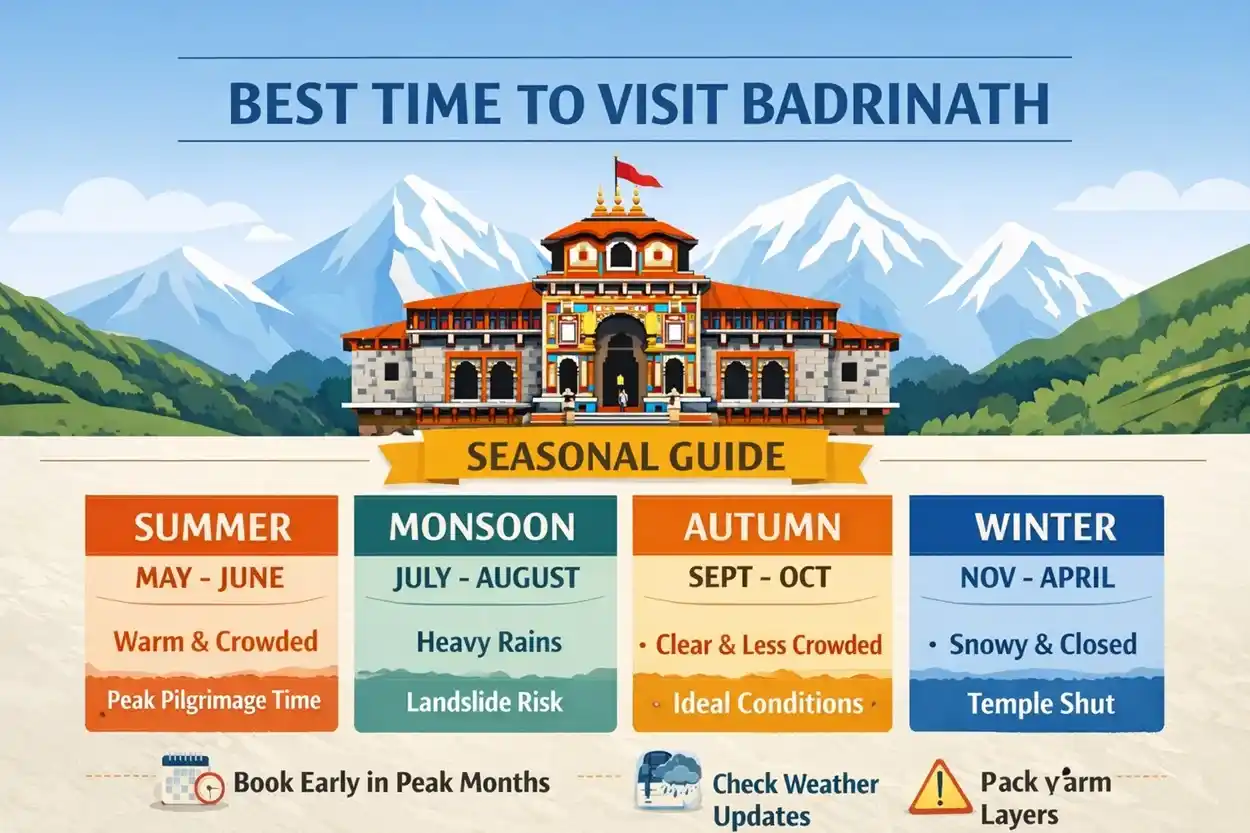
Table of Contents
ToggleWhy Timing Matters for Badrinath
Badrinath’s high-altitude Himalayan setting means:
- Winter snow closes roads and the temple for months — literally blocking access.
- Monsoon rains raise the risk of landslides and travel disruption.
- Summer and post-monsoon windows offer the clearest access but differ in crowd level and experience.
This isn’t a mild hill station; you’re crossing rugged mountain terrain. When you choose to go has real consequences for travel safety and enjoyment.
Seasonal Breakdown: What to Expect
Here’s a clear overview of climate, accessibility, and pros/cons through the year:
| Season | Months | Typical Weather | Travel Reality |
|---|---|---|---|
| Summer / Peak | May – June | 7°C to ~18°C | Pleasant days, temple open, roads clear; highest crowds. |
| Monsoon | July – August | 8°C to 17°C + heavy rain | Heavy rain, landslides risk, roads unstable, services limited. |
| Autumn / Post-Monsoon | September – October | 5°C to 15°C | Clear skies, fewer crowds, roads safe; ideal for many. |
| Winter | November – April | -5°C to ~10°C | Roads & temple closed; deep snow and sub-zero nights. |
All temperatures are approximate averages based on multiple authoritative travel climate guides.
Summer (May – June): Most Accessible But Crowded
For most pilgrims and travellers, May through June are the first months when Badrinath becomes accessible after winter. The temple opens around late April or early May each year, with 2026 gates set to open on 23 April.
What summer feels like:
- Days are mostly cool and comfortable (single-digit to mid-teens °C).
- Snow melts on many routes, revealing ripe green valleys and deep blue skies.
- Roads and bridges are fully open, making travel by road and even trekking safer.
Pros:
- Temple fully operational with all rituals and services available.
- Most guesthouses, hotels, cafes, and supporting businesses are open.
- Minimal weather-related road disruption.
Cons:
- This is peak season, and daily queues at the temple can be long.
- Accommodation prices may be higher — advance booking is wise.
- Nights can still be chilly, especially early May.
Who should pick this time: First-time pilgrims, families, and travellers who want reliable access and don’t mind crowds.
Monsoon (July – August): Risky and Unstable
The monsoon in Uttarakhand brings heavy rain to the Badrinath region. Roads remain open, and the temple is technically accessible, but travel conditions can be unstable.
What you need to know:
- Frequent rain increases landslide risk on mountain highways.
- Slippery trekking paths and narrow passes become hazards.
- Some smaller service providers (dhabas, guesthouses) may scale down operations due to low demand or supply issues.
Pros:
- Lower crowds and sometimes cheaper accommodation.
- Lush green landscapes and dramatic mountain scenery.
Cons:
- High risk of road blocks, delays, transport cancellations.
- Insurance may not cover landslide-related delays or evacuation costs.
Who should consider this: Highly experienced mountain travellers who are comfortable with unpredictability and weather-related risks.
Suggested Tour:
Autumn / Post-Monsoon (September – October): Best Balance
For a blend of relatively stable weather, lower crowds, and clear mountain views, the second peak window — mid-September through October — is often the most rewarding.
This period benefits from:
- The rain has stopped, but before winter’s deep cold arrives.
- Roads are generally safer after repair work, and skies are clearer.
- Views of the snow-capped Himalayas are sharper than they are in summer haze.
Pros:
- Fewer pilgrims than in May/June, meaning shorter queues.
- Clean air and excellent visibility for photography.
- Still fully operational pilgrimage services.
Cons:
- Nights are colder than summer and require warmer clothing.
- Some smaller restaurants and hotels start to close by late October.
Who should pick this time: Travelers seeking a quieter yet fully accessible pilgrimage experience.
Winter (November – April): Inaccessible, Harsh Conditions
From late November until late April or early May, the Badrinath region is mostly under snow and ice. Roads are closed or severely restricted, and the temple shutters for winter.
Travel reality:
- Average temperatures hover well below freezing, especially after sunset.
- Heavy snowfall and avalanche risk make road travel nearly impossible.
- However, the winter period does have a tradition: the idol is moved to the Narsingh temple in nearby Joshimath where worship continues.
Pros:
- Snow lovers may enjoy scenic winter hikes in nearby areas like Auli.
- Minimal tourist traffic.
Cons:
- Not practical for a Badrinath darshan pilgrimage itself.
- Travel costs can rise due to specialized winter transport and gear.
Who may still visit: Adventure travellers with winter mountain experience and backup plans.
Practical Tips for Any Season
- Book accommodation early for May–June and September–October. These windows are short and competitive.
- Check weather and road statuses daily during shoulder months (monsoon and autumn).
- Pack appropriately: even summer nights are chilly above 3,000 meters — warm layers help.
- Have contingency plans: delays due to landslides or weather can happen.
FAQ’s
1. When is the best time to visit Badrinath?
May–June and September–October offer comfortable weather, clear roads, and beautiful mountain views. Other months can bring snow or heavy rain.
2. Is it safe to go during monsoon?
July–August has heavy rainfall and slippery paths. Landslides are possible, so it’s not recommended for families or inexperienced trekkers.
3. How cold is winter?
November–April is very cold, with temperatures sometimes below freezing. The temple is closed during peak winter.
4. When is Badrinath most crowded?
Peak crowds occur in May–June and during festivals. Queues and accommodation shortages are common in this period.
5. Can I avoid crowds?
Yes. Late September–October or early May has fewer pilgrims, offering a calmer and more peaceful experience.
6. How long is the journey?
From Rishikesh, it takes about 10–12 hours by road. Local weather can affect travel times, especially in early or late season.
7. Does weather affect accessibility?
Yes. Roads can close due to snow or rain, and local transport may be suspended. Always check Uttarakhand Tourism or temple updates before traveling.
8. Are there risks of accidents?
Slippery roads, landslides, and sudden weather changes can cause accidents. Proper footwear, trekking poles, and caution are essential.
9. Which season balances weather and crowd?
May–June has pleasant weather and full services, while September–October offers fewer crowds with slightly cooler conditions.
10. Where to find official guidance?
Check the Uttarakhand Tourism Department or Badrinath Temple authorities for updates on road conditions, temple timings, and weather advisories.
Suggested to Read:

COMMENTS