If you are searching for how to plan Muktinath Yatra by helicopter, it usually means one thing — you want to avoid the exhausting road journey, unpredictable weather delays, and physical strain of long mountain travel.
In reality, Muktinath Yatra is not an easy trip. The terrain is rough, altitude is high at 3,710 metres, and travel windows are tight. Helicopter travel makes the journey faster, safer, and far more comfortable — especially for senior citizens, families, and time-restricted pilgrims.
From practical experience and pilgrim feedback, most confusion comes around:
- Route planning and helicopter boarding points
- 2026 cost structure and permit requirements
- Weather risks and why timing matters
- On-ground logistics at Muktinath
This guide breaks down exactly how to plan your Muktinath helicopter Yatra step-by-step, based on real travel operations and ground-level planning.

What Is Muktinath Yatra and Why Is Helicopter the Smart Choice?
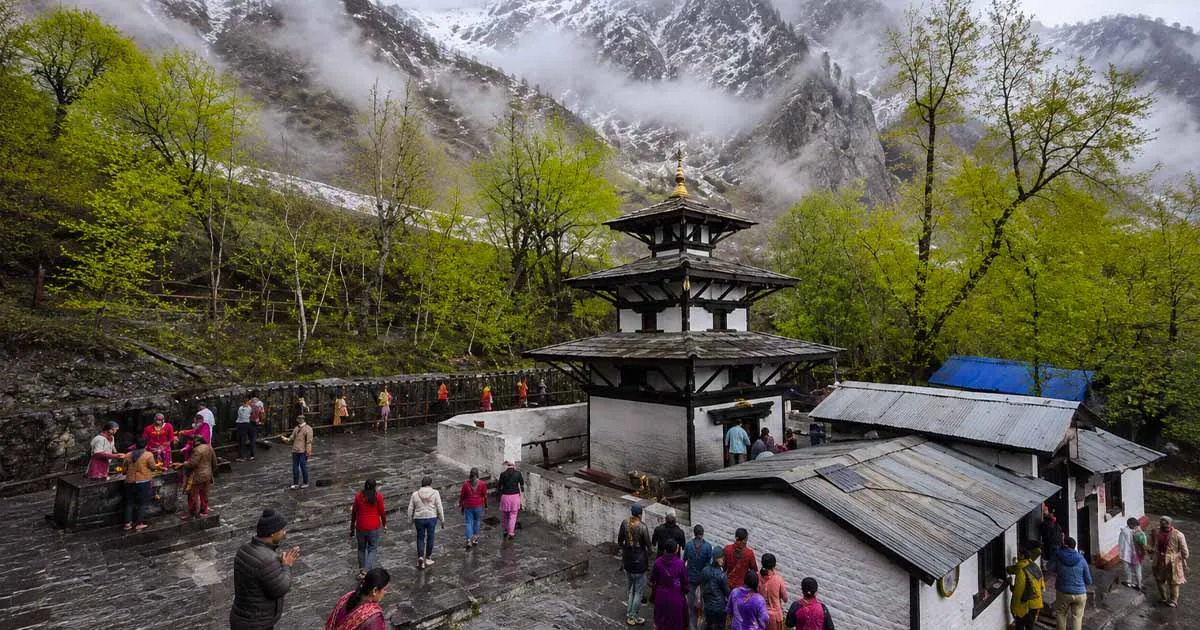
Muktinath Temple is located in the Mustang district of Nepal at 3,710 metres altitude. It is sacred for both Hindus and Buddhists — one of the highest altitude pilgrimage sites in the world.
For Hindus, Muktinath is one of the 108 Divya Desams — the most sacred Vishnu shrines. For Buddhists, it is considered a place of liberation. The temple complex includes 108 water spouts (representing the 108 Divya Desams), a natural flame fed by underground gas, and the Jwala Mai shrine.
Why Helicopter Travel Makes Sense
By road from Pokhara, reaching Muktinath involves:
- 8–10 hours on bumpy mountain jeep tracks
- High chance of altitude sickness from rapid ascent
- Unpredictable landslides and road closures
- Significant physical exhaustion before darshan even begins
Helicopter travel reduces this to 35–45 minutes of flying, making the Yatra:
- Faster — full day trip instead of 3–4 days
- Safer — no mountain road risk
- More predictable — weather windows are manageable
- Physically less demanding — critical for senior pilgrims
Step-by-Step Planning Flow
| Step | What You Do | Why It Matters |
|---|---|---|
| 1 | Reach Kathmandu or Pokhara | Main helicopter bases for Muktinath |
| 2 | Acclimatisation stay — 1 night minimum | Reduces altitude sickness at 3,710m |
| 3 | Early morning helicopter flight (6–10 AM) | Only reliable weather window in Mustang valley |
| 4 | 15-minute walk from helipad to temple | Slightly uneven terrain — plan accordingly |
| 5 | Darshan and temple exploration — 1.5–2 hours | 108 water spouts, Jwala Mai shrine, Buddhist gompa |
| 6 | Return flight before noon | Wind speeds increase significantly after 11 AM |
Best Helicopter Routes for Muktinath Yatra
Route Option 1 — Pokhara to Muktinath (Most Preferred)
| Segment | Mode | Duration |
|---|---|---|
| India → Kathmandu | Flight | 1.5–3 hrs depending on origin city |
| Kathmandu → Pokhara | Flight / Road | 25 min / 6–7 hrs |
| Pokhara → Muktinath | Helicopter | 35–45 min |
| Darshan and visit | Walking | 1.5–2 hrs |
| Muktinath → Pokhara | Helicopter | 35–45 min |
Why Pokhara is the best base:
- Shortest helicopter flight time to Muktinath
- Most stable helicopter operations in Nepal
- Best weather conditions for morning flights
- Easier logistics than Kathmandu
Route Option 2 — Kathmandu to Muktinath (Direct)
| Segment | Mode | Duration |
|---|---|---|
| Kathmandu → Muktinath | Helicopter | 60–75 min |
| Darshan and visit | Walking | 1.5–2 hrs |
| Muktinath → Kathmandu | Helicopter | 60–75 min |
This route is possible but:
- Significantly more expensive than Pokhara route
- Longer flight duration increases weather risk
- Highly dependent on Kathmandu morning visibility
This option is typically chosen by VIP travellers, international pilgrims, and groups where time is the primary constraint.
Helicopter Cost Structure 2026
| Route | Per Person Cost (INR) | Type |
|---|---|---|
| Pokhara → Muktinath → Pokhara | ₹70,000 – ₹95,000 | Shared (4–5 pax) |
| Kathmandu → Muktinath → Kathmandu | ₹1,80,000 – ₹2,50,000 | Private |
| Full charter — 5 passengers | ₹3,50,000 – ₹4,80,000 | Group charter |
Cost depends on: weather conditions, season, Nepal aviation fuel rates, and passenger sharing arrangements.
Note: Shared helicopter costs are per person. Private charter cost covers the full helicopter regardless of passenger count — more cost-effective for groups of 4–5 travelling together.
For Indian pilgrims, the total trip cost including Kathmandu/Pokhara flights, hotel, Nepal entry, and helicopter runs approximately ₹1,20,000–₹1,80,000 per person for a 4–5 day trip.
Best Time to Plan Muktinath Helicopter Yatra
March–May — Spring Window ✅
- Stable helicopter flying conditions
- Clear mountain visibility
- Rhododendron season on approach routes
- High pilgrim demand — book 15–21 days in advance
September–November — Autumn Window ✅ Best Overall
- Post-monsoon clarity — best mountain visibility of the year
- Less turbulence than spring
- Pleasant temperatures at 3,710m (5°C–15°C daytime)
- Best overall window for Muktinath helicopter Yatra
Months to Avoid
| Month | Reason |
|---|---|
| July–August | Heavy monsoon, landslides on Nepal roads, frequent helicopter cancellations |
| December–February | Snow at Muktinath, freezing temperatures, high flight cancellation rate |
Required Documents and Permits — 2026
For Indian Citizens
- Passport — mandatory for Nepal entry (Aadhaar card and voter ID are no longer accepted at Nepal immigration as of 2023)
- 2 passport-size photographs
- Nepal entry — Indians do not need a visa for Nepal, but passport is compulsory
- Travel insurance — strongly recommended for high-altitude helicopter travel
For Foreign Nationals (Non-Indian)
- Valid passport
- Nepal Tourist Visa — available on arrival at Tribhuvan International Airport, Kathmandu (USD 30 for 15 days, USD 50 for 30 days)
- Travel insurance with high-altitude and evacuation coverage — mandatory for most nationalities
Important 2026 Note on Passport Requirement
Since 2023, Nepal has tightened entry documentation. Indian citizens must carry a valid passport — voter ID and Aadhaar card are no longer accepted at the Nepal border or airport immigration. Plan passport validity accordingly: minimum 6 months validity beyond your travel date.
What Actually Happens on Helicopter Yatra Day
From practical operations at Udan Aviation, this is the actual day sequence:
| Time | Activity |
|---|---|
| 5:30–6:00 AM | Hotel pickup in Pokhara |
| 6:15 AM | Transfer to Pokhara airport helipad |
| 6:30 AM | Weight check (5 kg baggage limit strictly enforced) + safety briefing |
| 6:45–7:00 AM | Departure — 35–40 minute flight over Annapurna range |
| 7:30–7:45 AM | Landing at Muktinath helipad |
| 7:45 AM | 15-minute walk to temple complex |
| 8:00–9:30 AM | Darshan — 108 water spouts, Jwala Mai shrine, Vishnu temple, Buddhist gompa |
| 9:30–10:00 AM | Return walk to helipad |
| 10:00–10:30 AM | Return flight to Pokhara — before valley winds increase |
| 11:15 AM | Back in Pokhara |
This timing discipline is non-negotiable. Wind speed in Mustang valley increases significantly after 11 AM. Flights departing after 10 AM face higher cancellation risk. All reliable operators depart by 7 AM at the latest.
Weather Reality — Why Early Morning Flights Are Non-Negotiable
Most pilgrims do not realize that wind speed in Mustang valley increases drastically after 11 AM due to thermal activity over the Tibetan plateau.
That is why 90% of Muktinath helicopter flights operate between 6 AM and 10 AM only.
Flights scheduled after 10 AM face:
- High cancellation rate — operator will abort if wind speed exceeds limits
- Sudden turbulence on approach
- Possible emergency returns mid-flight
If any operator offers you an 11 AM or afternoon helicopter slot to Muktinath — this is a risk signal. Ask for a morning slot or choose a different operator.
Safety and Health Tips for High-Altitude Helicopter Yatra
Before the Flight
- Hydrate well the day before — 3–4 litres of water
- Avoid alcohol for 48 hours before the flight — it significantly worsens altitude sickness
- Eat only a light breakfast on flight day — heavy meals increase nausea risk at 3,710m
- Do not fly if you have active cold, sinus infection, or ear infection — pressure changes cause severe pain
- Consult your doctor before booking if you have cardiovascular, BP, or respiratory conditions
At Muktinath (3,710 metres)
- Oxygen levels are approximately 35% lower than at sea level
- Walk slowly from helipad to temple — do not rush even for a short 15-minute walk
- Symptoms of Altitude Mountain Sickness (AMS): headache, nausea, dizziness, breathlessness — rest immediately if any appear
- Emergency oxygen is available at the helipad — inform the pilot if you feel unwell at any point
- The temple complex itself is at a slightly higher elevation than the helipad — the uphill walk is short but noticeable at altitude
Senior Citizen Specific
- Helicopter Yatra eliminates the road journey but does not eliminate altitude itself
- At 3,710m, Muktinath is higher than Kedarnath (3,583m) and Badrinath (3,133m)
- Senior pilgrims must do a medical fitness check before booking — not optional
- An acclimatisation night in Pokhara (822m) before the flight helps the body begin adjusting
Common Mistakes Pilgrims Make
Booking without buffer days. If the first morning flight is cancelled due to weather, you need a second day available. Pilgrims with no buffer return without completing the Yatra. Always keep minimum 1 buffer day in Pokhara.
Ignoring altitude acclimatisation. Flying directly from Kathmandu (1,400m) or a sea-level Indian city to Muktinath (3,710m) without a night’s rest at Pokhara (822m) significantly increases AMS risk on the day of darshan.
Choosing the cheapest operator blindly. Muktinath helicopter operations involve high-altitude aviation under CAAN (Civil Aviation Authority of Nepal) regulations. Operators cutting costs on maintenance or using pilots without Himalayan experience create real risk. Verify operator credentials before paying any advance.
Overloading baggage. The 5 kg limit is strictly enforced — not a guideline. Excess baggage is offloaded at the helipad, not carried on the flight. Pack specifically for a 4-hour excursion, not a multi-day trip.
Underestimating weather risk. Even in spring and autumn, Mustang valley weather changes within 30 minutes. Book with an operator who has a clear weather cancellation and rescheduling policy in writing.
Packing Checklist for Muktinath Helicopter Yatra
Clothing:
- Down jacket or heavy fleece — mandatory, even in spring. Temperature at 3,710m: 5°C–12°C in spring, 0°C–8°C in autumn
- Thermal inner wear — top and bottom
- Warm socks and gloves
- Windproof layer
Equipment:
- Sunglasses — UV intensity is extremely high at this altitude
- Sunscreen SPF 50+
- Lip balm — air is very dry at 3,710m
Health:
- Personal medicines with extra supply
- Pulse oximeter — monitors blood oxygen at altitude (₹800–₹1,200)
- ORS sachets
- Pain relief tablets
Documents:
- Passport (original — mandatory for Nepal entry)
- 2 passport-size photographs
- Travel insurance documents
- Helicopter booking confirmation
Baggage note: Total weight including hand baggage must not exceed 5 kg. Carry a small daypack only.
Why Choose Udan Aviation for Muktinath Helicopter Yatra
Udan Aviation is an ISO-certified helicopter Yatra operator based at Sahastradhara Helipad, Dehradun — with 16 years of experience in India’s pilgrimage aviation sector.
What we handle end-to-end:
- India to Nepal flight coordination
- Kathmandu and Pokhara hotel bookings
- Helicopter slot booking with CAAN-certified Nepal operators
- On-ground coordinator in Pokhara throughout your trip
- Passport and documentation guidance before departure
- Emergency support contact throughout travel
Our Muktinath package is not a standalone helicopter booking. It is a complete managed journey — from your departure city in India to your return.
📞 +91-93104-19931 ✉ info@udanaviation.in 🌐 www.udanaviation.in 📍 Sahastradhara Helipad, Dehradun
Frequently Asked Questions
Q1. Is Muktinath helicopter Yatra safe in 2026?
Yes — flights operate under CAAN Nepal aviation guidelines with experienced mountain pilots. Choose operators with a verified safety record.
Q2. How much time is needed for the full Muktinath helicopter Yatra?
One full day for the flight and darshan, plus 1 travel day each side. Minimum 4–5 days total including India–Nepal travel.
Q3. Can senior citizens do Muktinath Yatra by helicopter?
Yes — with a medical fitness check and acclimatisation night at Pokhara. The helicopter eliminates road travel but altitude at 3,710m still requires health clearance.
Q4. Is oxygen available during the helicopter flight?
Yes — all helicopters carry emergency oxygen cylinders as standard.
Q5. What is the baggage limit for Muktinath helicopter?
5 kg per passenger, strictly enforced. Pack a small daypack only.
Q6. Is VIP darshan available at Muktinath?
No official VIP darshan system exists at Muktinath. Helicopter travellers typically arrive early morning before road tour groups — this naturally means minimal crowd at the temple.
Q7. Can the helicopter wait during darshan?
Yes — helicopters wait 1.5–2 hours at Muktinath while pilgrims complete darshan and temple exploration.
Q8. Are flights refundable if cancelled due to weather?
Yes — weather-based cancellations are fully refundable or rescheduled to the next available morning slot. Confirm this policy in writing before booking.
Q9. Is advance booking necessary?
Yes — helicopter slots fill 7–15 days in advance during peak season (March–May and September–November). Do not assume walk-in availability.
Q10. Which city is best for helicopter boarding?
Pokhara is the most reliable helicopter base for Muktinath — shortest flight time, most stable operations, best morning weather window.
Q11. Do Indian citizens need a visa for Nepal?
No visa required — but a valid passport is mandatory. Aadhaar and voter ID are no longer accepted at Nepal immigration since 2023.
Q12. What is the altitude of Muktinath temple?
3,710 metres — higher than Kedarnath (3,583m) and Badrinath (3,133m). Altitude preparation is essential.
Final Advice — Plan It Right
When planning your Muktinath Yatra by helicopter, always remember: this is not a normal tourist flight. It is high-altitude aviation over the Himalayas.
Buffer days, correct season selection, morning-only flights, verified operators, and proper altitude preparation matter far more than finding the cheapest price.
Planned correctly, the Muktinath helicopter Yatra offers one of the most spiritually powerful and visually extraordinary pilgrimage experiences available anywhere in the world.
Ready to plan your Muktinath Yatra by helicopter?
📞 Call/WhatsApp: +91-93104-19931 ✉ info@udanaviation.in 🌐 www.udanaviation.in