
Many people planning their first pilgrimage ask this exact question — and it is the right question to ask before committing to either trek. Kedarnath and Vaishno Devi are both famous, both spiritually significant, and both involve a trek. But they are not equally difficult.
This guide gives you the honest comparison so you can choose based on your actual fitness, age, and travel situation — not just what sounds inspiring.
Kedarnath is significantly more difficult. It is at more than double the altitude of Vaishno Devi (3,583m vs 1,585m), the terrain is steeper and rockier, and altitude sickness is a real risk. Vaishno Devi is a well-maintained, manageable uphill walk suitable for most people with basic fitness.
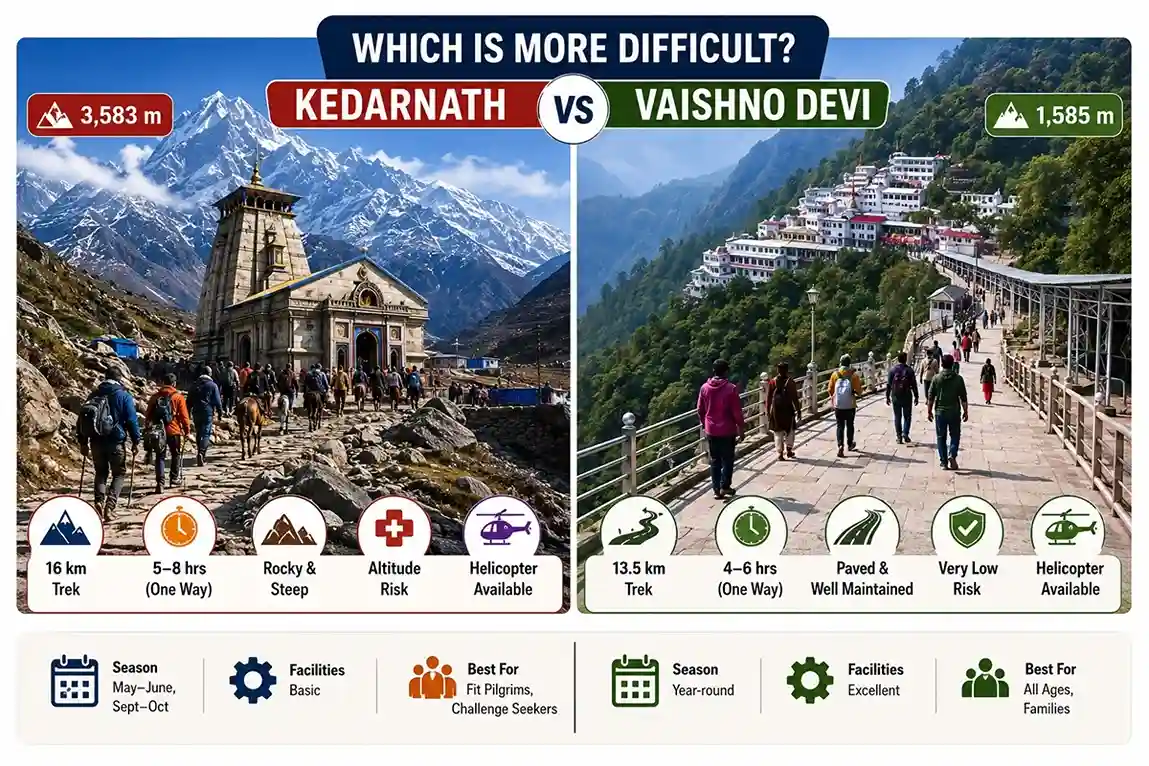
Kedarnath vs Vaishno Devi — Quick Comparison Table
| Factor | Kedarnath | Vaishno Devi | Winner |
|---|---|---|---|
| Altitude | 3,583 metres (11,755 ft) | 1,585 metres (5,200 ft) | Vaishno Devi — safer |
| Trek Distance | 16 km from Gaurikund | 13.5 km from Katra | Vaishno Devi — shorter |
| Trek Duration | 5–8 hours (one way) | 4–6 hours (one way) | Vaishno Devi — faster |
| Season | May–June, September–October | Year-round | Vaishno Devi — flexible |
| Terrain | Rocky, steep, stone-stepped | Well-paved, maintained path | Vaishno Devi — easier |
| Altitude Sickness Risk | Moderate-High | Very low | Vaishno Devi — minimal |
| Facilities | Medical posts, tea stalls, pony/palki | Well-developed — pony, palki, battery car | Vaishno Devi — better |
| Helicopter Available | Yes — Phata, Sirsi, Guptkashi | Yes — Katra helipad | Tie |
| Difficulty Level | Moderate-High | Low-Moderate | Vaishno Devi — easier |
| Best For | Fit pilgrims, challenge seekers | All ages, first-timers, families | Depends on pilgrim |
About Vaishno Devi
The Vaishno Devi temple is located in the Trikuta Hills of Jammu and Kashmir at 1,585 metres — well within a comfortable altitude for most people. The shrine houses the three Pindies of Mahakali, Mahalaxmi, and Mata Durga.
The trek from Katra base camp is 13.5 km one way via the official Ban Ganga route (the newer, more commonly used route). The older Darshani Dwar route is slightly shorter at 12 km but less frequently used now. The path is paved, well-lit, and maintained year-round by the Shri Mata Vaishno Devi Shrine Board. Rest stops, food stalls, medical aid, pony services, battery-operated vehicles, and clean toilets are available throughout.
Most pilgrims complete the one-way trek in 4–6 hours. It is uphill but not technically difficult. The trail is wide enough for two-way pilgrim traffic at all times.
Vaishno Devi is open 365 days a year. This makes it the most flexible of all major pilgrimage treks in India.
Must Reads on
About Kedarnath
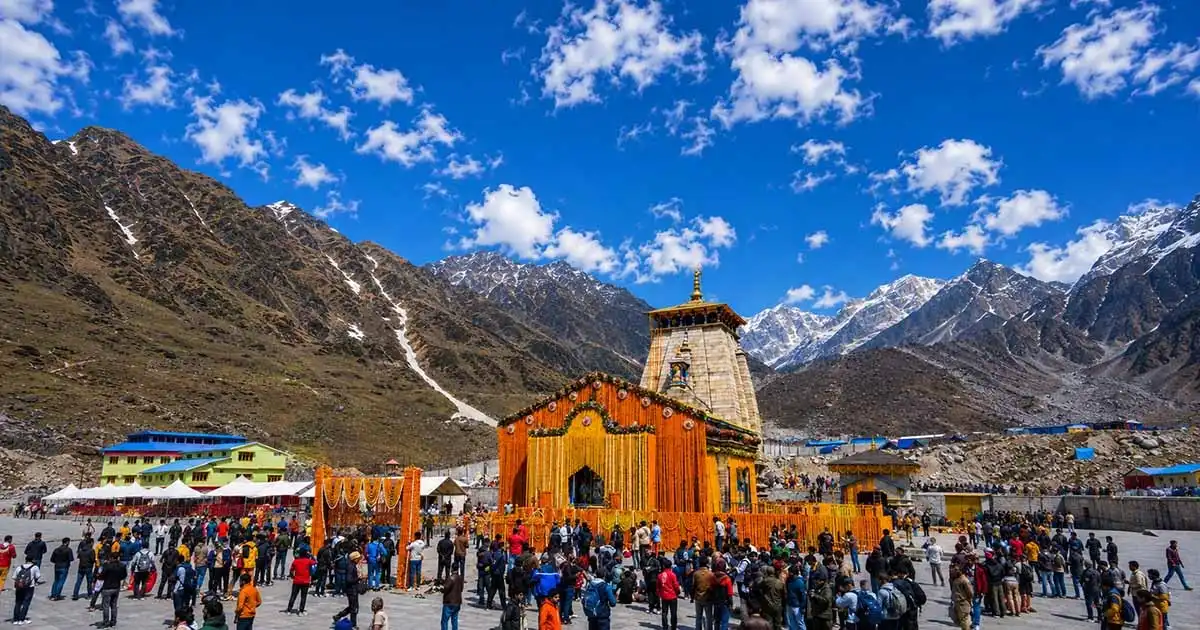
Kedarnath Temple is located at 3,583 metres in the Rudraprayag district of Uttarakhand — one of the 12 Jyotirlingas of Lord Shiva and a key stop on the Char Dham Yatra.
The trek from Gaurikund is 16 km one way, gaining approximately 1,400 metres in altitude. The first 4 km out of Gaurikund are the steepest — stone-stepped, continuous climb, little shade. After Jungle Chatti, the trail opens into the Mandakini river valley. The final 3–4 km before the temple climb steeply again.
Most pilgrims take 5–8 hours ascending, 4–6 hours descending.
Kedarnath opened on 22 April 2026 and closes on 11th November 2026. Travel outside this window is not possible.
Detailed Factor Comparison
Altitude and Oxygen Levels
This is the single biggest difference between the two treks.
Vaishno Devi at 1,585 metres: Oxygen levels are approximately 14% lower than at sea level — noticeable for some but not concerning for most people.
Kedarnath at 3,583 metres: Oxygen is approximately 35% lower than at sea level. This is significant. The body needs time to adjust. Altitude Mountain Sickness (AMS) — headache, nausea, dizziness, breathlessness — is a genuine risk, especially for pilgrims coming from low-altitude cities like Mumbai, Chennai, or Bangalore.
Verdict: Vaishno Devi altitude is not a concern for most pilgrims. Kedarnath altitude requires preparation and medical consultation for anyone above 60 or with health conditions.
Trek Distance and Terrain
Vaishno Devi: 12–14 km on a paved, well-maintained path. Uphill but consistent. No technical sections, no river crossings, no sudden altitude changes.
Kedarnath: 16 km on a stone-stepped, rocky trail. Steep sections at beginning and end. Weather on the trail changes — afternoon clouds can bring rain even in May. Trail sections can become slippery after rain.
Verdict: Vaishno Devi trail is objectively easier — shorter, paved, better maintained.
Facilities on the Route
Vaishno Devi: Among the best-facilitated pilgrimage treks in India. Paved path, electric lighting along sections, food stalls every 2–3 km, medical posts, rest shelters, clean toilets, ATMs. Battery-operated vehicles (Yatri Vahan) available for initial sections. Pony and palki available.
Kedarnath: Well-developed by Himalayan trek standards — medical aid posts every 3–4 km, tea stalls, basic food. Pony and palki available from official counters at Gaurikund. However, facilities thin out considerably in the final 4–5 km before the temple.
Verdict: Vaishno Devi facilities are better developed and more consistent throughout.
Season and Weather
Vaishno Devi: Open year-round. Best weather November–March (cool, clear) and June–September. July–August is monsoon but the paved trail remains accessible. No altitude weather risk.
Kedarnath: Strict seasonal window — May to November only. July–August monsoon brings rain and slippery trails but the Yatra continues. September–October is the best season — dry, clear, manageable crowds.
Verdict: Vaishno Devi wins on flexibility. Kedarnath requires planning around its seasonal window.
Helicopter Options
Kedarnath helicopter: Operates from Phata, Sirsi, or Guptkashi to Kedarnath helipad (1–1.5 km from temple). Flight time: 8–12 minutes. Operating window: 6 AM–10 AM only. Book through IRCTC (heliyatra.irctc.co.in) or verified operators like Udan Aviation.
Vaishno Devi helicopter: Operates from Katra to Sanjichhat helipad. From Sanjichhat, pilgrims walk approximately 2.5 km to the main cave entrance. Flight time: 7–8 minutes. Operated by the Shrine Board and private operators. More frequent services than Kedarnath.
Both helicopter options available — Vaishno Devi helicopter covers a higher proportion of the total route.
Which Is Suitable for Senior Citizens?
For pilgrims above 65: Vaishno Devi is more suitable. The lower altitude eliminates AMS risk, the paved path is easier on joints, and battery vehicles reduce the initial walking distance. Many 70+ pilgrims complete Vaishno Devi without difficulty.
For Kedarnath: The helicopter package is strongly recommended for seniors — it eliminates the 16 km trek. However, even at the helipad and temple area (3,583m), altitude affects the body. Doctor consultation before booking is essential for anyone above 65.
Important Travel Tips
Start trekking early — for both. At Kedarnath, a 5 AM start from Gaurikund lets you reach the temple before peak afternoon heat and crowd build-up. At Vaishno Devi, an early start avoids the peak mid-morning pilgrim rush on the trail.
Book helicopter in advance. Kedarnath helicopter slots for May–June fill weeks ahead. Vaishno Devi helicopter is easier to book but also fills up during Navratri and peak periods. Book early for both.
Pack layered clothing for Kedarnath. At 3,583m, temperatures at Kedarnath drop to 0–5°C at night even in May. Warm socks, thermal inner wear, and a waterproof jacket are non-negotiable. Vaishno Devi requires only light woollens.
Register before visiting Kedarnath. Yatra Registration at registrationandtouristcare.uk.gov.in is compulsory for Kedarnath — checked at multiple checkpoints. Vaishno Devi has no registration requirement.
Frequently Asked Questions
Q1. Which trek is harder — Kedarnath or Vaishno Devi?
Kedarnath is significantly harder — more than double the altitude (3,583m vs 1,585m), longer trek (16 km vs 13.5 km), rockier terrain, and altitude sickness risk. Vaishno Devi is manageable for most people with basic fitness.
Q2. What is the distance of each trek?
Kedarnath: 16 km from Gaurikund. Vaishno Devi: 13.5 km from Katra via the official Ban Ganga route.
Q3. Which trek is better for first-timers?
Vaishno Devi — well-maintained path, all-season access, no altitude concerns, excellent facilities throughout.
Q4. What is the distance between Vaishno Devi and Kedarnath?
Approximately 842 km by road between Katra (Vaishno Devi base) and Kedarnath.
Q5. Can I do both in one trip?
Yes but it requires careful planning — the destinations are 842 km apart. Most pilgrims combine Vaishno Devi with Amritsar and Kedarnath with other Char Dhams as separate trips.
Q6. Which has better helicopter service?
Both have helicopter options. Vaishno Devi helicopter covers a larger proportion of the route and runs more frequently. Kedarnath helicopter gets you within 1–1.5 km of the temple.
Q7. Is Kedarnath registration compulsory?
Yes — register free at registrationandtouristcare.uk.gov.in. Each pilgrim registers individually.
Q8. Which trek has better scenery?
Kedarnath — the Mandakini river valley, snow-covered Himalayan peaks, and the temple setting at 3,583m is visually extraordinary. Vaishno Devi offers pleasant hill views but not comparable to high Himalayan terrain.
Conclusion
Kedarnath and Vaishno Devi are both deeply meaningful pilgrimages — but they are not equally difficult. Kedarnath demands more physical preparation, more altitude awareness, and more careful planning. Vaishno Devi is genuinely manageable for most people with basic fitness and offers year-round access.
If you are choosing between the two for your first pilgrimage — Vaishno Devi is the accessible, low-risk introduction to Himalayan pilgrimage. Kedarnath is the more demanding, more remote, more viscerally powerful experience.
For helicopter services to Kedarnath, Udan Aviation operates from Dehradun with 16 years of Himalayan pilgrimage experience.
📞 +91-93104-19931 | ✉ info@udanaviation.in | 🌐 www.udanaviation.in
VERY GOOD INFORMATION