Millions of pilgrims undertake the Char Dham Yatra every year. But not all of them come prepared — and in the Garhwal Himalayas, being underprepared has real consequences: altitude sickness, missed darshans due to checkpost registration failures, stranded itineraries from monsoon landslides, or cancelled helicopter slots booked through unauthorized agents.
This guide covers every practical travel tip for Char Dham Yatra 2026 — from the mandatory registration step most first-timers overlook, to what to pack, how to book, and what not to do. In 2026, the season opens on 19 April — the earliest in recent years. Planning early is not just advisable. It is the only way to secure your preferred dates.
10 Most Important Char Dham Yatra Tips
- Register at registrationandtouristcare.uk.gov.in before leaving home — it is mandatory
- Book GMVN accommodation at gmvnonline.com at least 3–4 weeks before peak dates
- Book Kedarnath helicopter ONLY at heliyatra.irctc.co.in — no agents, no third-party sites
- Carry Aadhaar original + printed URN registration slip + helicopter e-ticket at all times
- Carry minimum ₹8,000–₹10,000 cash in small notes — UPI fails above Uttarkashi
- Pack thermals — nights at Kedarnath and Badrinath drop to 2–5°C even in May
- Acclimatize at Guptkashi or Uttarkashi before ascending further — do not rush
- Book morning helicopter slots — afternoon weather cancellations are the most common problem
- Follow the traditional sequence: Yamunotri → Gangotri → Kedarnath → Badrinath
- Build one buffer day before any return flights — weather delays are real and common
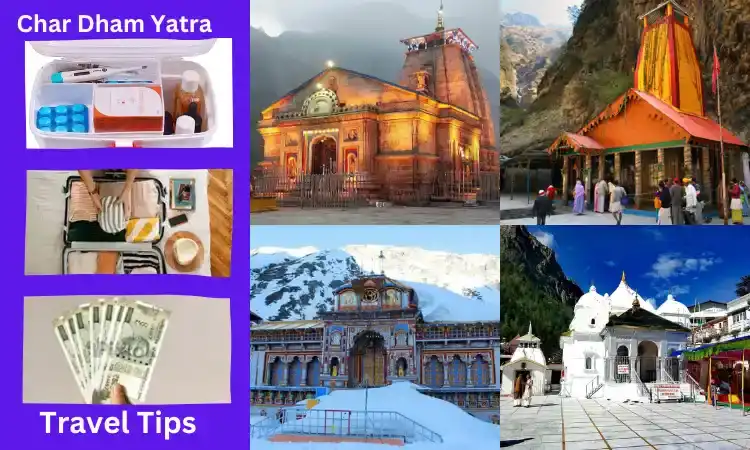
1. Choose the Right Time for Your Yatra
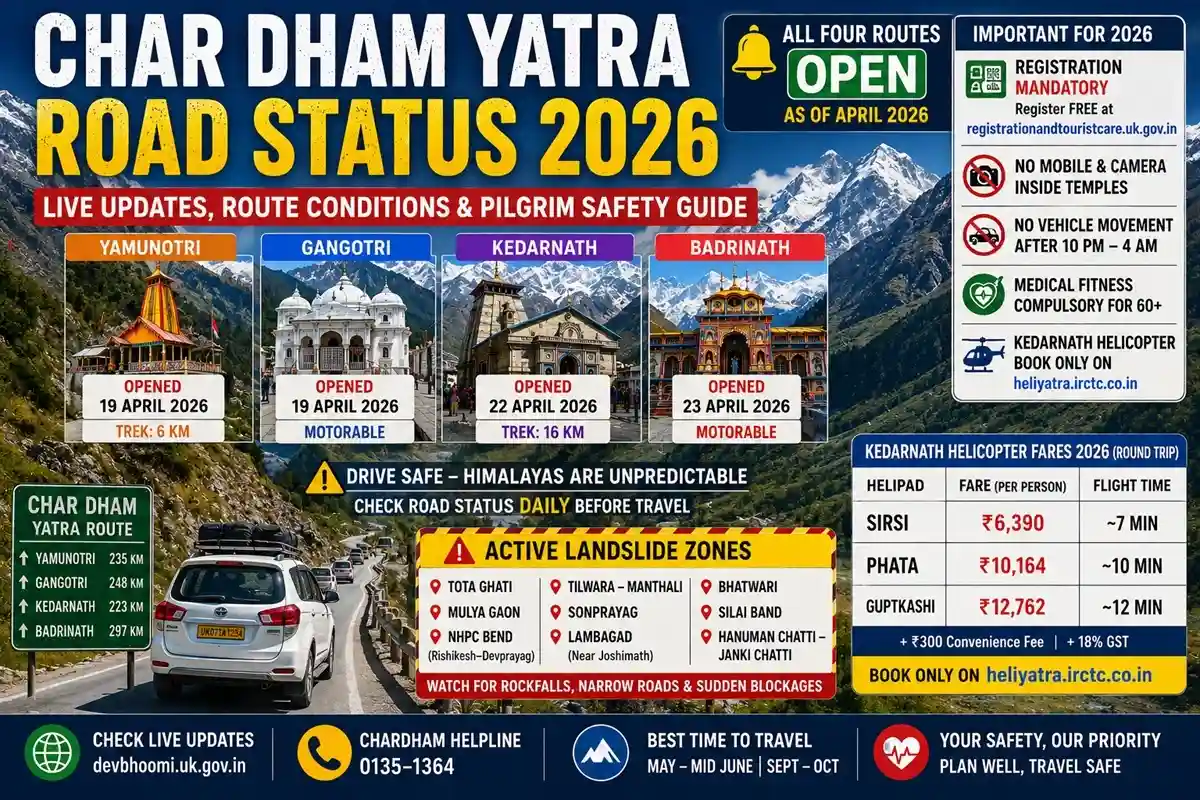
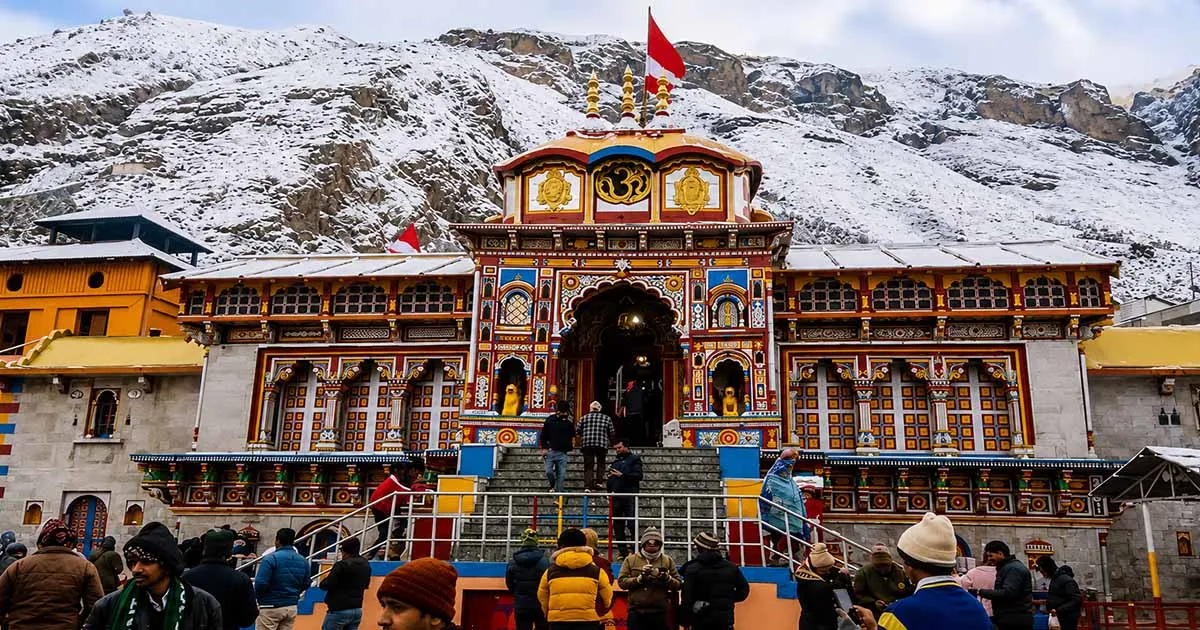
The Char Dham season runs from late April to November. In 2026, Yamunotri and Gangotri open on 19 April, Kedarnath on 22 April, and Badrinath on 23 April.
- Best months: May–June (peak season, best weather) and September–October (fewer crowds, clear skies)
- Avoid: July–August (monsoon season — landslides, road closures, reduced helicopter services)
- Late April is a new opportunity in 2026 — trails may have snow, but crowds are minimal
Tip: If you value peaceful darshan over convenience, target early May or first two weeks of October. Both offer stable weather and significantly shorter queues at all four temples.
2. Complete Mandatory Yatra Registration First
This is the step most first-timers skip — and it results in being turned back at the very first checkpost. Since 2023, Aadhaar-linked online registration is compulsory for all Char Dham pilgrims.
- Register at: registrationandtouristcare.uk.gov.in — 2026 portal opened 6 March 2026
- You need: Aadhaar card + OTP on registered mobile number
- You receive a URN (Unique Registration Number) — save it on your phone AND take a printout
- Without URN: You will be stopped at checkposts on every highway leading to the four dhams
- Helicopter booking requires URN: You cannot book Kedarnath tickets on IRCTC HeliYatra without a valid URN
Important: Do this weeks before departure — not on the way. Walk-in registration counters at Rishikesh and Haridwar exist but queues take 2–3 hours during peak season.
3. Plan Your Itinerary With Acclimatization in Mind
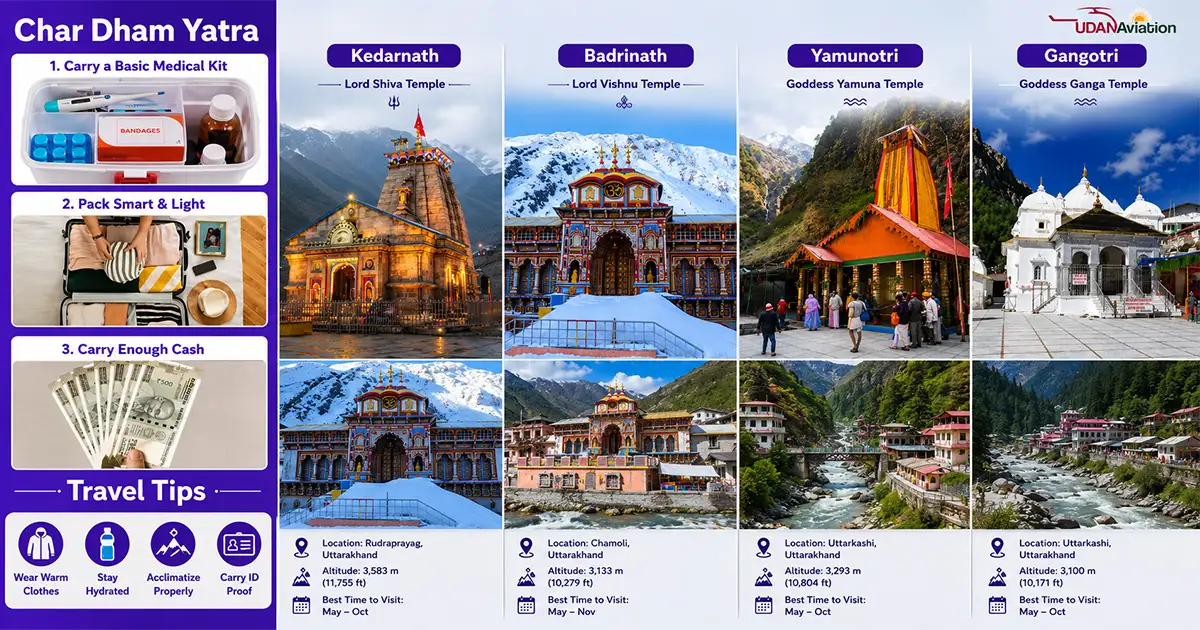
The Char Dham circuit covers altitudes from 290 m (Haridwar) to 3,583 m (Kedarnath). Jumping from plains to high altitude in 2 days causes Acute Mountain Sickness (AMS) — headaches, nausea, fatigue that can abort the yatra entirely.
- Build one acclimatization night at Uttarkashi (1,158 m) before visiting Gangotri (3,100 m)
- Build one acclimatization night at Guptkashi (1,319 m) before the Kedarnath trek
- Total comfortable itinerary: 10–12 days by road; 5–6 days by helicopter
- Helicopter pilgrims: Even without the trek, altitude exposure at Kedarnath (3,583 m) is sudden — sit quietly for 15–20 min after landing before moving toward the temple
- Keep the traditional order: Yamunotri → Gangotri → Kedarnath → Badrinath. This is not just traditional — it matches road connectivity and gradually increases altitude exposure
One mistake many people make: Trying to compress the circuit into 7–8 days by road. This means either skipping acclimatization stops or rushing Mana Village, Bhairav Temple, and other key places. Ten days minimum. Twelve is better.
4. Pack Smart for High Altitude
The Himalayas have their own logic. What feels like a sunny spring day in Haridwar becomes serious cold at Kedarnath by evening. Pack in layers, not in bulk.
Clothing
- Thermal inners (2 pairs) — mandatory at Kedarnath and Badrinath even in May
- Fleece mid-layer and windcheater outer jacket
- Waterproof trekking shoes with ankle support
- Extra socks, monkey cap, light gloves, muffler
- Compact rain poncho — Himalayan weather changes within the hour
- Modest clothing for temple entry — no shorts; women carry a dupatta or stole
Health and Safety
- Paracetamol, antacid, ORS sachets, anti-diarrheal, antiseptic
- Altitude sickness tablets (Diamox / Acetazolamide) — consult your doctor before use
- Pulse oximeter — especially important for those above 55 or with cardiac/BP history
- SPF 50+ sunscreen — UV radiation is intense above 3,000 m
- Personal prescription medicines with 14+ days supply
Documents (Carry All of These)
- Aadhaar card — original required at helipads and checkposts
- Chardham Yatra registration slip with URN — printed AND on phone
- Helicopter e-ticket printout — screenshots NOT accepted at check-in
- GMVN / hotel booking confirmations
- Emergency contact list — written on paper, not just on phone
Essentials
- Cash: ₹8,000–₹10,000 minimum in ₹100 and ₹500 notes — no ATMs above Uttarkashi and Guptkashi
- Powerbank and torch — electricity is unreliable in high-altitude areas
- Reusable water bottle — stay hydrated; dehydration worsens altitude sickness
- Dry snacks: nuts, dry fruits, energy bars, glucose biscuits
Spiritual Items
- Prayer beads or rosary
- Flowers and incense for offerings
- Small cloth pouches for cooking prasad at Surya Kund (Yamunotri)
- Religious books or scriptures if needed
5. Prioritize Your Health Throughout the Yatra
High altitude is the biggest health risk of the Char Dham Yatra. Three of the four dhams — Yamunotri (3,293 m), Kedarnath (3,583 m), and Badrinath (3,133 m) — are above 3,000 meters. At these altitudes, the body gets less oxygen than at sea level.
- Stay hydrated — drink 3–4 litres of water daily; herbal tea and glucose drinks help
- Eat light — heavy meals at altitude worsen nausea; stick to khichdi, dal-roti, rice
- Walk slowly — at Kedarnath, even fit pilgrims should maintain a slow, steady pace
- Watch for AMS symptoms: persistent headache, nausea, dizziness, loss of appetite → descend immediately if they worsen
- If above 60 years or have BP/cardiac history: get a doctor’s fitness certificate before the yatra; carry it with you
Senior citizens: Helicopter packages + pony/palki services make the full circuit accessible for most elderly pilgrims in moderate health. Do not attempt the 16 km Kedarnath trek on foot if you have known cardiac or respiratory conditions.
6. Book Accommodation in Advance
Accommodation at key stops fills weeks ahead during peak season. Do not assume you will find a room on arrival in May–June.
- GMVN Tourist Rest Houses are the most reliable — book at gmvnonline.com
- Key booking stops: Barkot / Janki Chatti (Yamunotri base), Uttarkashi (Gangotri base), Guptkashi / Sonprayag (Kedarnath base), Badrinath town
- For Kedarnath: Book Guptkashi or Sonprayag accommodation — rooms at Kedarnath summit are very limited and more expensive
- GMVN Kedarnath (at summit): Dormitory available; book through gmvnonline.com well in advance for May dates
Budget tip: September–October rooms at most stops are 20–35% cheaper than May–June rates. Same quality, fewer crowds, better availability.
7. Plan Your Transportation Carefully
How you travel between the four dhams significantly impacts the quality of your experience. Each option has trade-offs.
| Mode | Duration | Best For | Key Consideration |
| Road (bus/taxi) | 10–12 days | First-timers; complete experience | Book inter-city taxis in advance; shared cabs fill fast in peak season |
| Helicopter | 5–6 days | Seniors; limited time | Book at heliyatra.irctc.co.in only; 2026 fares: Sirsi ₹6,086 / Phata ₹9,680 / Guptkashi ₹12,154 (return + GST) |
| Road + Helicopter | 7–9 days | Those needing flexibility | Road for Yamunotri and Gangotri; helicopter for Kedarnath is the most common hybrid |
Helicopter fraud warning: Only heliyatra.irctc.co.in is the authorized portal for Kedarnath helicopter tickets. UCADA does not take direct bookings. Any agent, WhatsApp group, or third-party site claiming to sell Kedarnath heli tickets at ‘discounted rates’ is a scam. Multiple fraud cases are reported each season.
8. Respect Local Customs and Temple Rules
- Dress modestly at all four temples — no shorts, no sleeveless tops
- Remove shoes before entering any temple premises
- Photography inside temple sanctums is prohibited at most dhams — check signs before taking photos
- Do not touch the main idol or linger at the sanctum entrance; keep the queue moving
- Engage with priests and local people respectfully — they are custodians of these sites
- Avoid littering — carry a small bag for your waste; the Himalayan environment is fragile
9. Go Beyond the Main Temples
The four dhams are the centerpiece — but some of the most memorable moments of the Char Dham Yatra happen at the places most organized tours rush past.
- Mana Village (3 km from Badrinath): Last village before the Tibet border; Vyas Gufa, Bhim Pul, Saraswati River disappearing underground — do not skip this
- Gangnani Hot Spring (en route Gangotri): Natural sulphur spring; one of the best stops on the circuit that most itineraries bypass
- Bhairav Temple (500 m behind Kedarnath): Quieter, deeply atmospheric; visit after main darshan
- Ganga Aarti at Har Ki Pauri (Haridwar): The yatra starts here — arrive by 5:45 PM for the 6:15 PM aarti
- Chandrashila Peak (above Tungnath): If you have an extra day near Guptkashi/Chopta, the 5 km round trek offers the finest panoramic views in Uttarakhand
10. Eat Right on the Yatra
The Himalayan mountain food is simple and nourishing. Let it be. Avoid the temptation to seek restaurant-style meals on this circuit — the local options are what your body needs at altitude.
- Dal, rice, khichdi, and sabzi — light, easy to digest, and available everywhere
- Avoid heavy non-vegetarian meals at high altitude — digestion slows significantly above 3,000 m
- Try the local specialties: kachauri and jalebi in Haridwar, chai at every mountain stop, local rajma-chawal at Uttarkashi
- Stay away from raw salads and unboiled water at high altitude — gastrointestinal illness is the second most common medical complaint after altitude sickness
- Carry dry snacks for the Kedarnath trek — glucose biscuits, dry fruits, nuts, ORS sachets
From Ground-Level Experience: What No One Tells First-Timers
The Char Dham Yatra has a rhythm. Pilgrims who fight it — rushing between dhams, skipping rest days, not carrying cash, trusting WhatsApp agents for helicopter bookings — consistently have harder trips.
One mistake that repeats every season: pilgrims leaving Haridwar without completing Chardham registration online, assuming they can do it at the highway counter. On a peak May morning, the walk-in registration queue at Rishikesh Yatra Camp can take 3 hours. Meanwhile, their pony booking at Janki Chatti expires and the bus they planned to take to Barkot has left.
The pilgrims who have the smoothest trips are consistently the ones who registered online in March, booked GMVN in April, secured their helicopter slot on the day IRCTC opened bookings, and built two rest nights and one buffer day into their plan. None of that is complicated. It just requires starting earlier than feels necessary.
Common Mistakes to Avoid
- Skipping Chardham registration — the single most common reason pilgrims are turned back at checkposts
- Buying helicopter tickets from unauthorized agents — the only legitimate portal is heliyatra.irctc.co.in
- Not carrying cash — UPI, cards, and ATMs all become unreliable above Uttarkashi and Guptkashi
- Rushing to Kedarnath without acclimatization at Guptkashi — AMS is the most common medical emergency on the circuit
- Planning July–August without contingency for road closures — the Rishikesh–Badrinath NH closes multiple times every monsoon
- Packing excess baggage for helicopter — 5 kg cabin baggage limit is strictly enforced at every helipad weigh-in
- Booking return flights the same day as helicopter yatra — weather delay can push departure by 1–2 full days
- Forgetting to visit Mana Village after Badrinath darshan — the most common regret among first-time pilgrims
Pro Tips From Experienced Yatra Pilgrims
- Temple darshan at Kedarnath and Badrinath starts at 4 AM — queue at dawn to avoid 3–5 hour afternoon waits
- VIP darshan pass at Kedarnath (₹2,500/person) is worth every rupee during peak season — book via IRCTC HeliYatra alongside helicopter ticket
- Print all documents before leaving Haridwar — no print shops above Uttarkashi or Guptkashi
- Carry ₹100 and ₹500 notes only — prasad counters and pony operators cannot change large bills
- Wear socks inside all four temples — stone floors are bone-cold even in May
- Save offline maps of the route on your phone — data connectivity disappears frequently above Barkot and Uttarkashi
Frequently Asked Questions
What documents are required for Char Dham Yatra 2026?
You need: (1) Original Aadhaar card — required at helipads and every major highway checkpost. (2) Chardham Yatra registration slip with your URN from registrationandtouristcare.uk.gov.in — printed and on phone. (3) Helicopter e-ticket printout if flying. (4) Hotel booking confirmations. (5) Any personal medical prescriptions.
Is Char Dham Yatra registration mandatory in 2026?
Yes. Since 2023, Aadhaar-linked online registration is compulsory for all pilgrims. The 2026 portal opened on 6 March 2026 at registrationandtouristcare.uk.gov.in. Without your URN, you will be stopped at every checkpoint. You also cannot book a Kedarnath helicopter ticket without a valid URN.
How do I book a Kedarnath helicopter ticket in 2026?
Only at heliyatra.irctc.co.in — the sole authorized portal. You need an IRCTC account, Chardham Yatra URN, and Aadhaar details for each passenger. 2026 bookings opened 11 April 2026. Fares: Sirsi ₹6,086 | Phata ₹9,680 | Guptkashi ₹12,154 (return, per person + 18% GST + ₹300 IRCTC fee).
What should I pack for Char Dham Yatra?
Thermals, fleece, windcheater, waterproof shoes, rain poncho, pulse oximeter, altitude sickness tablets (after consulting doctor), ORS sachets, first aid kit, original Aadhaar, URN registration slip, helicopter e-ticket, powerbank, torch, and ₹8,000–₹10,000 cash in small notes.
How many days do I need for Char Dham Yatra?
By road: minimum 10–12 days from Haridwar and back for a comfortable, non-rushed experience. By helicopter: 5–6 days. Trying to do the road circuit in fewer than 10 days means skipping acclimatization stops.
What is the best way to travel for senior citizens?
Helicopter package is the most suitable. Combined with pony (₹2,200–₹3,000 one way) or palki (₹5,000–₹7,000 one way) services for the short distances near each dham, the full circuit is accessible for most elderly pilgrims in moderate health. Carry a pulse oximeter and get a fitness certificate from a doctor before the yatra.
Can I do Char Dham Yatra during monsoon (July–August)?
Technically yes, but not recommended for most pilgrims. Frequent road closures, high landslide risk, reduced helicopter operations, and basic facilities that partially shut down make July–August the most unpredictable window. If you must go in this period, carry extra cash for additional nights, do not book fixed-date return transport, and check road status daily at uttarakhand.gov.in.
Is it safe to trek to Kedarnath in 2026?
Yes — the Kedarnath trek (16 km one way from Gaurikund) is the same route walked by millions of pilgrims each year. The path is well-maintained stone steps for most of its length. Pony, palki, and helicopter alternatives are available. Avoid attempting the trek in July–August when the trail becomes slippery. Always trek before noon and start the descent by 1–2 PM.
What food is available during Char Dham Yatra?
Dal, rice, khichdi, chapati, and simple sabzi are available at tea stalls and small dhabas throughout the circuit. Options are most limited at Kedarnath (3,583 m) due to altitude restrictions on permanent structures. Carry dry snacks — nuts, dry fruits, energy bars, glucose biscuits — for the Kedarnath and Yamunotri treks.
How much cash should I carry for Char Dham Yatra?
Minimum ₹8,000–₹10,000 in ₹100 and ₹500 denomination notes. ATMs become sparse and unreliable beyond Uttarkashi and Guptkashi. UPI and card machines exist at some shops in Badrinath and Kedarnath base areas but connectivity is inconsistent. Cash is essential for pony hire, prasad, chai stops, and any unplanned extra nights.
What is the correct sequence for visiting all four dhams?
The traditional and correct order is Yamunotri → Gangotri → Kedarnath → Badrinath. This is the west-to-east geographic sequence and also the most logical route considering road connectivity in Uttarakhand.
Conclusion
The Char Dham Yatra is one of the most rewarding spiritual journeys in India — and one of the most logistically demanding. The pilgrims who have the smoothest experience are consistently those who registered online early, booked accommodation and helicopter slots in advance, packed for altitude, carried cash, and built rest days into their plan.
In 2026, the season opens earlier than usual — 19 April for Yamunotri and Gangotri. That means planning starts now. Every key booking — GMVN accommodation, IRCTC helicopter slots, VIP darshan passes — fills faster than most pilgrims expect.
Planning your Char Dham Yatra 2026 by helicopter? Contact Udan Aviation for full Chardham packages from Dehradun with transparent pricing, senior support, VIP darshan coordination, and 24×7 assistance.