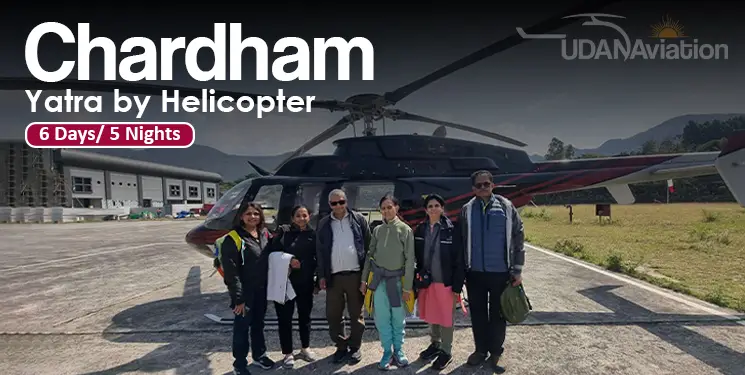
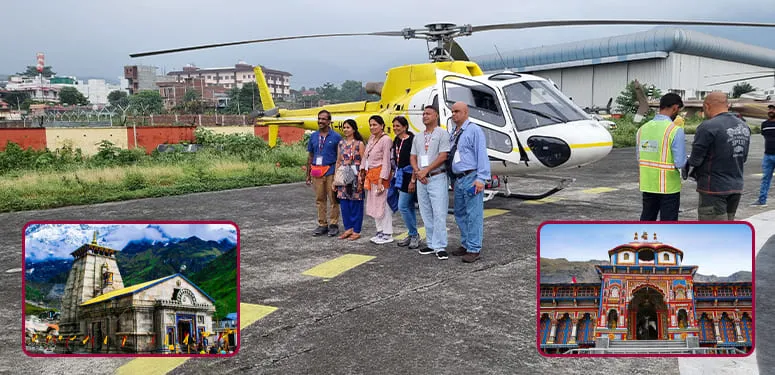
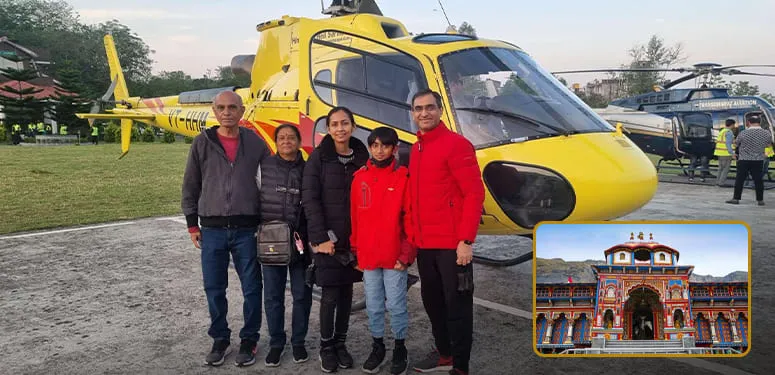
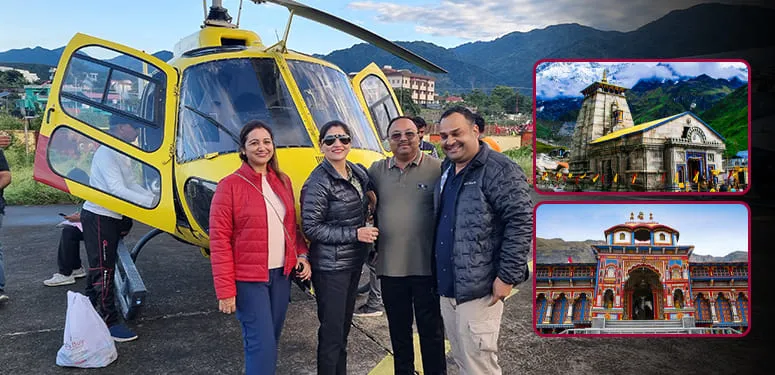
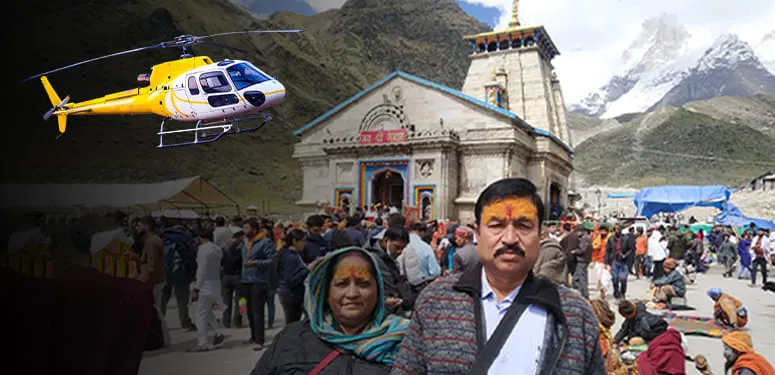
The Char Dham Yatra is one of the most important pilgrimages in Hinduism. Pilgrims believe this yatra cleanses sins and brings them closer to moksha. With our Char Dham Yatra by helicopter package, you can visit the four Char Dham sites of Yamunotri, Gangotri, Kedarnath, and Badrinath by helicopter from Dehradun. The package includes darshan assistance, sightseeing, accommodation, and meals.
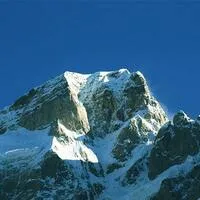
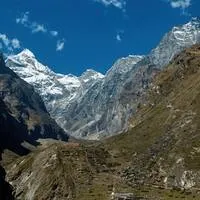
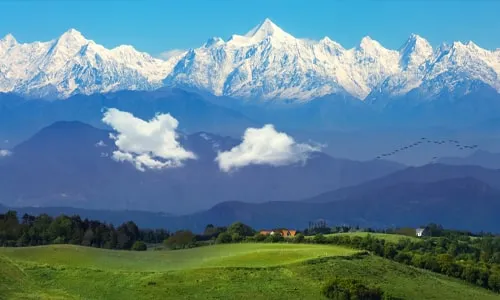
In 6 days and 5 nights, you cover all four Dhams by helicopter, stay at comfortable hotels, get darshan assistance at every temple, and travel with full ground support at each location. The helicopter ride itself gives you an aerial view of the Garhwal Himalayas that most people never get to see: the snow-covered peaks, the Alaknanda and Bhagirathi river valleys, the remote mountain terrain. It is part of the experience.
This package is particularly suited for senior citizens, people with mobility constraints, and anyone who cannot spare more than a week for the pilgrimage. Every detail, from transport, stay, meals and darshan coordination to the pony service at Yamunotri, is handled. You focus on the Yatra.
Quick answer: Our Char Dham helicopter package costs ₹2,20,000 per person for 6 days and 5 nights. Flights start and end at Sahastradhara Helipad, Dehradun, and cover Yamunotri, Gangotri, Kedarnath and Badrinath, with hotels and meals included. The same yatra by road usually takes 10 to 12 days. Flights operate only in daylight and clear weather, so keep one buffer day after the tour.
Char Dham Helicopter Package 2026-27 at a Glance
| Category | Details |
|---|---|
| Destinations | Yamunotri, Gangotri, Kedarnath, Badrinath: the four dhams of Uttarakhand |
| Departure point | Sahastradhara Helipad, Dehradun, Uttarakhand |
| Duration | 6 days / 5 nights (Day 1 is arrival and briefing in Dehradun) |
| Cost | ₹2,20,000 per person (inclusions and exclusions listed below) |
| Departures | Fixed daily departures through the yatra season; each flight still depends on weather |
| Highest point | Kedarnath: 3,583 m (11,755 ft) |
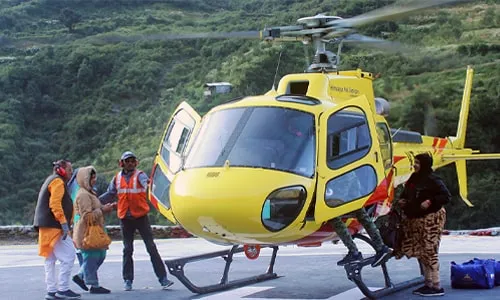
| Aircraft | Airbus H125 (Eurocopter AS350 B3) or Bell 407, up to 6 passenger seats + 1 pilot |
| Weight limits | 75 kg per passenger; 450 kg combined per flight; loads capped at 70% of maximum permissible capacity under 2026 rules |
| Baggage | 5 kg per passenger, soft duffel bag |
| Season | Late April or early May to November, with a monsoon break in July and August |
| Best months | May, early June, and mid-September to late October |
| Mandatory registration | Uttarakhand Char Dham Yatra registration (free; QR-coded registration letter) |
| Nearest airport | Jolly Grant Airport, Dehradun (DED): about 45 minutes to an hour by road from Sahastradhara |
| Physical difficulty | Low to moderate: short walks at altitude, plus a pony or doli ride of about 6 km each way at Yamunotri |
| Flight rules | Day Visual Flight Rules only. No night flying, no instrument approaches. |
| Ideal For | Senior citizens, NRIs, families, people with mobility issues, anyone short on time |
Who the Char Dham Helicopter Tour Is For
Not everyone who books the helicopter Yatra is doing it for comfort. Most people choose it because the road route isn't a realistic option for them. Here are the main groups:
Senior Citizens (60+)
The Kedarnath trek from Gaurikund is about 16 to 18 km each way and climbs to 3,583 metres. Even with ponies and palanquins, it involves hours of physical effort in thin air. For many pilgrims above 65, the helicopter is what makes the Yatra possible at all. We cover this in more detail in our guide to the Char Dham helicopter yatra for senior and physically challenged pilgrims. Some walking remains. At Yamunotri you ride a pony or doli from Janki Chatti, at Kedarnath the temple is about 500 metres from the helipad, and every temple has its own short walk and steps. Gangotri and Badrinath are reached by road from the helipad.
NRI Pilgrims
Indians living abroad often plan their Char Dham Yatra around a 7 to 10 day India trip. A 10 to 12 day road yatra doesn't fit into that. The 6-day helicopter circuit does, and it doesn't require adjusting to Indian road travel after years away. NRI bookings typically come with specific requirements around food quality and communication, and Udan Aviation handles both.
People with Health Conditions
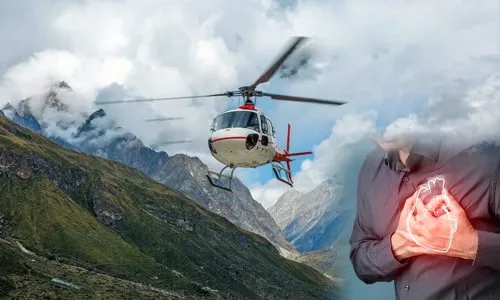
Heart patients, those with controlled diabetes, or people recovering from surgery often want to complete the Yatra but can't manage the physical exertion of the road route. The helicopter cuts out the trekking. The altitude stays exactly the same, so get a doctor's clearance before booking. If you have a severe heart condition, uncontrolled blood pressure or an active psychiatric disorder, do not book unless your doctor clears you in writing. Heart patients can read whether Char Dham by helicopter is safe for them before speaking to their cardiologist. See the health section below.
Families with Young Children or Elderly Members
Managing a 70-year-old parent and two young children through 10 to 12 days of mountain roads and trekking is a logistical challenge. The helicopter route gives the trip a fixed shape, with one schedule, booked hotels, included meals and ground support at every stop. Weather can still push a flight back by a few hours or a day.
Anyone with Limited Time
Six days to complete one of Hinduism's most important pilgrimages. If you're a working professional, business owner, or anyone who can't take two weeks off, this is the most practical way to fit the Char Dham Yatra into your calendar.
Before you compare prices: a Kedarnath helicopter ticket is not a Char Dham package
These are two completely different products. A Kedarnath helicopter ticket is a single shuttle sector of roughly seven to fifteen minutes, booked through the government's IRCTC HeliYatra portal, costing a few thousand rupees. A Char Dham helicopter package is a six-day private charter from Dehradun covering all four dhams with hotels, transfers and darshan coordination, costing around two lakh rupees per person.
Both products fly on the same circuit. In the first phase of the 2026 season (April to 26 June), the Ministry of Civil Aviation counted 67,064 pilgrims on shuttle flights and 11,715 on charters, across 12,032 shuttle departures and 2,065 charter flights.
If you searched for a helicopter to Kedarnath and were quoted ₹2 lakh, nobody was overcharging you. You were quoted for a different service. This confusion costs pilgrims time and goodwill every season, so here it is plainly.
| IRCTC HeliYatra shuttle ticket | Char Dham charter package | |
|---|---|---|
| What you get | One return flight, one sector | A managed six-day pilgrimage |
| Covers | Kedarnath only | All four dhams |
| Flies from | Sersi, Phata or Guptkashi: valley helipads you must first reach by road | Sahastradhara Helipad, Dehradun |
| Flight time | Roughly 7 to 15 minutes each way | Several hours of flying across six days |
| 2026 return fare (as announced, incl. GST) | ₹6,390 (Sersi), ₹10,164 (Phata), ₹12,762 (Guptkashi) | ₹2,20,000 per person |
| Booked through | The official IRCTC HeliYatra portal only | A yatra operator such as Udan Aviation |
| Hotels | Not included | Five nights included |
| Ground transfers | Not included | Included throughout |
| Darshan assistance | Not included | Included |
| Availability | Sells out quickly when each batch is released | Book well before the balance-payment date (40 days before travel) |
| Suits | Someone already doing the circuit by road who wants to skip the Kedarnath trek | Someone who wants the whole pilgrimage handled, in six days, without driving |
Shuttle fares are fixed for each season and were announced for 2026 before the yatra opened. Convenience and payment-gateway charges can be added, so check the current fare on the IRCTC HeliYatra portal before you plan around it.
Both are legitimate. If you are already travelling by road and only want to avoid the Kedarnath trek, the IRCTC shuttle is the right choice and you should not pay lakhs for something you do not need. If you want the entire pilgrimage compressed and managed, the shuttle cannot do that at any price.
Across the market, six-day Char Dham helicopter packages are generally priced between about ₹2,00,000 and ₹2,50,000 per person. Peak May and June rates sit at the top of that range; September and October are usually lower.
| Package | Duration | Dhams covered |
|---|---|---|
| Char Dham by helicopter | 6 days / 5 nights | All four |
| Do Dham by helicopter (same day) | Same day | Kedarnath + Badrinath |
| Do Dham by helicopter (with night stays) | 4 days | Kedarnath + Badrinath |
| Kedarnath by helicopter (Ek Dham) | Same day | Kedarnath |
| Badrinath by helicopter (Ek Dham) | Same day | Badrinath |
Why a Char Dham helicopter package costs what it does
The most common reaction to a two-lakh quote is that it must be enormously profitable. The economics are less flattering than people assume, and we would rather show you where the money goes than claim to be cheapest.
A single-engine turbine helicopter such as the Airbus H125 carries a substantial cost per flying hour once fuel, maintenance reserves, insurance, crew and financing are accounted for. A six-day Char Dham circuit involves several hours of flying. The aircraft also has to reposition between sectors, and it earns nothing while sitting on the ground waiting out weather.
On top of the flying: five nights of hotels at different mountain locations, ground transfers at every stop, pony or doli arrangements at Yamunotri, darshan coordination at four temples, a yatra coordinator travelling with the group, helipad and landing charges, government and DGCA fees, and GST.
The constraint most people never think about
Under the safety rules introduced for the 2026 season, passenger loads on the Char Dham circuit are capped at 70 percent of maximum permissible capacity. In practice, a six-seat helicopter may fly with fewer than six passengers. How many board depends on their combined weight and on the aircraft's performance that day.
In our view, this rule is a big part of why per-seat prices went up in 2026. The aircraft costs the same to fly, and fewer people now share that cost. The rule applies to every operator on the circuit. If a quote is far below the market, ask exactly what the price covers before you pay.
Hotels Included in the Char Dham Helicopter Package
| Night | Location | Hotel Options | Meals |
|---|---|---|---|
| Night 1 | Dehradun | Hyatt Centric / Fairfield Marriott | Dinner & Breakfast |
| Night 2 | Kharsali (Yamunotri base) | Yamunotri Kriti Resort / La Arkja Cottages | All meals |
| Night 3 | Harsil (Gangotri base) | Himalayan Nature Resort / Sundar HomeStay / Harsil retreat / Cottages / Neelangana / Royal Hill Crest | All meals |
| Night 4 | Sitapur / Guptkashi (Kedarnath base) | Villa Aadya / Ghughuti Resort / Shivalik / Kedar Paradise Resort | All meals |
| Night 5 | Badrinath | Sarovar Portico / Snow Crest / Lords / New Yoga / Amrittara | All meals |
Hotel allocation depends on availability on your travel dates. If a listed property is full on your dates, Udan Aviation provides an equivalent alternative. Every hotel in this package has been personally visited and checked by the team for cleanliness, food quality, and how they treat pilgrims. Meals on the yatra are vegetarian. [EDITOR: add hotel category / star rating.]
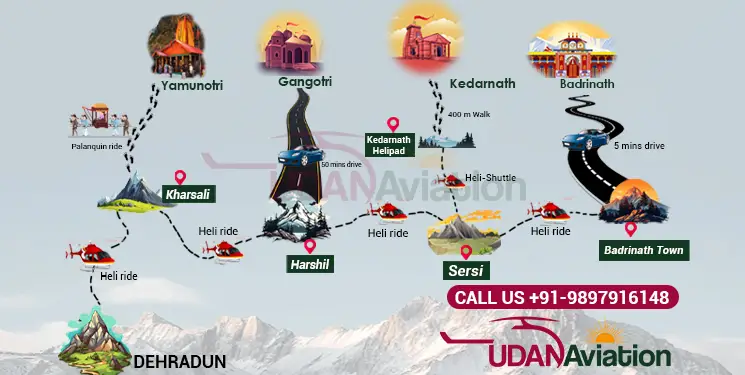
The route: sectors, helipads and flight times
The circuit runs west to east. Yamunotri is the westernmost dham and Badrinath the easternmost, so the standard itinerary follows that line rather than doubling back.
| Sector | Lands at | Approx. flight time | Onward leg from helipad |
|---|---|---|---|
| Dehradun → Yamunotri | Kharsali Helipad (about 2,600 to 2,700 m) | 30 to 45 minutes | About 6 km each way by pony or doli from Janki Chatti to the temple (3,293 m), as given by the state registration portal. It is the longest onward leg on the circuit |
| Yamunotri → Gangotri | Harsil Helipad (about 2,600 to 2,700 m) | About 30 minutes | Road transfer of about 22 to 25 km to the temple (about 3,100 m), often underestimated by first-time visitors |
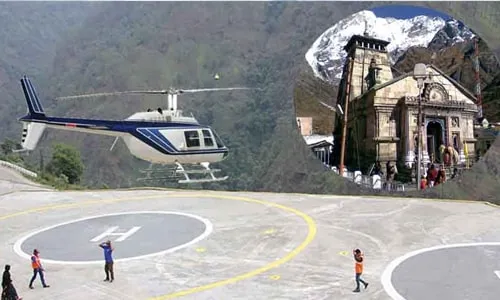
| Gangotri → Kedarnath | A Kedarnath valley base helipad (Sersi, Phata or Sitapur), then Kedarnath Helipad | About 45 minutes, plus a 6 to 10 minute shuttle | A walk of about 500 metres to the temple, at the highest altitude on the trip (3,583 m) |
| Kedarnath base → Badrinath | Badrinath Helipad | About 30 minutes | Short road transfer to the temple (3,133 m); Mana village is 3 km further |
| Badrinath → Dehradun | Sahastradhara Helipad (about 640 m) | 45 to 60 minutes | n/a |
Flight times are approximate and depend on the route the pilot takes on the day.
Fixed daily departures
Most Char Dham helicopter bookings are sold subject to aircraft availability, which means your date is confirmed only once a seat can be secured. Udan Aviation runs fixed daily departures through the yatra season, so your date does not depend on a seat turning up later. Weather can still delay a flight on the day.
This matters more in 2026-27 than it used to. With Kedarnath shuttle frequency cut by about 30 percent and passenger loads capped at 70 percent of maximum capacity, seat availability across the circuit has become far less predictable. Fixed scheduling is the difference between a plan and a hope.
It also means one team is accountable for the whole trip. Udan Aviation plans and manages flight timings, ground handling at each helipad, hotels, transfers, darshan coordination and on-trip support. The flying itself is done by our NSOP partner, explained below.
How your flight is operated
Aircraft on Udan Aviation departures are operated by a DGCA-approved Non-Scheduled Operator Permit (NSOP) holder, whose pilots, engineers and maintenance programme are covered by that permit. This is the standard structure for Char Dham helicopter operations.
In practice it means safety oversight of the flight sits with a DGCA-licensed aviation company, while your yatra is planned and run by one accountable team.
What changed in 2026: capacity cuts and new safety rules
The 2025 season saw several fatal helicopter accidents on the Char Dham circuit. The regulatory response reshaped the product: fewer flights, stricter pilot requirements, reduced passenger loads, and new weather and surveillance infrastructure.
The safety measures now in force
According to the Ministry of Civil Aviation's press release of 27 June 2026, these measures were in force for the 2026 season:
| Category | Details |
|---|---|
| Pilot experience minimum | 750 hours of hill flying, including 100 hours in the preceding year and at least 10 take-offs and landings at Kedarnath |
| Passenger load cap | Limited to 70% of maximum permissible capacity |
| Weather infrastructure | Five Automatic Weather Observation Systems at Sitapur, Kedarnath, Badrinath, Jhala and Kharsali |
| Surveillance | 33 PTZ cameras across critical locations |
| Coordination | Two Integrated Command, Control, Communication and Coordination Centres, at Sahastradhara and Sitapur |
| Air traffic control | ATC at Sahastradhara and Sersi |
| Aircraft tracking | Tracking devices fitted to all helicopters on the circuit |
| Obstacle marking | High-tension line markers and warning balloons along flight corridors |
| Flight rules | Day Visual Flight Rules only. No night operations. |
The capacity reduction, and what it means for your booking
Alongside the safety measures, flight volumes were cut. Kedarnath shuttle frequency was reduced by about 30 percent, and charter operations were placed under caps. The 70 percent load cap compounds this: fewer flights, each carrying fewer people.
- Seats sell out earlier than they used to. The booking window that felt comfortable in 2023 is no longer comfortable. Book earlier than you think you need to.
- Prices went up. In our reading, the main reason is that the same aircraft cost is now shared by fewer passengers. Every operator on the circuit faces this.
- "No availability" is more often genuine. With fewer seats in the system, a full date is more likely to be a real capacity limit than a sales tactic.
Safety: what the 2026 rules change
Mountain helicopter flying carries real risk, and 2025 showed it. The 2026 measures (weather stations, aircraft tracking, air traffic control, stricter pilot minimums and lower loads) were brought in to address the problems found after those accidents. The Ministry reported no incident in the first phase of the 2026 season. That is encouraging. One half-season is still too short to prove the risk has fallen, and weather, terrain and operational risk remain part of every flight.
Any company that tells you this is completely safe is either uninformed or not being straight with you. Our longer note on how safe the Char Dham Yatra by helicopter is goes through this in detail. Ask any operator what the weather-abort policy is, who makes that call, and what happens to your money when a sector is cancelled.
Health, altitude and fitness
The helicopter removes the trekking, not the altitude. You spend Night 2 at Kharsali and Night 3 at Harsil (both about 2,600 to 2,700 m), which helps a little. But on Day 4 you go from a valley helipad to Kedarnath at 3,583 metres within minutes, and Badrinath (3,133 m) follows the next day. That rapid ascent is the largest medical consideration on this trip.
Acute Mountain Sickness
AMS can affect anyone above roughly 2,500 metres, and fitness is not protective. Marathon runners get it and sedentary people sometimes do not. Early symptoms are headache, nausea, dizziness, unusual breathlessness and difficulty sleeping. They usually develop 6 to 12 hours after arriving at altitude.
- Move slowly at Kedarnath and Yamunotri. Walking pace matters more than anything else.
- Drink water steadily from the day before you fly.
- No alcohol the night before or during the yatra.
- Eat lightly. A heavy meal before an early flight helps nobody.
- Tell your coordinator at the first symptom. Descent is the treatment, and on this trip descent is a short flight away, which is one genuine safety advantage of the helicopter circuit.
Diamox (acetazolamide)
Diamox is a prescription medication that helps prevent and reduce altitude sickness. If you've had altitude problems before or are visiting high altitude for the first time, discuss it with your doctor at least a week before travel. Do not self-medicate. Diamox has contraindications with certain conditions and medications.
Conditions that need medical clearance before booking
Your doctor decides if you are fit for this altitude. The table shows what we ask for before booking.
| Condition | What to do |
|---|---|
| Heart disease, stent, bypass | Written cardiologist clearance for altitude to 3,600 m. Recent procedures usually mean deferring the trip. |
| Pacemaker or arrhythmia | Cardiologist clearance. Carry device documentation. |
| Uncontrolled hypertension | Stabilise before travel. Altitude raises blood pressure. |
| Asthma or COPD | Pulmonologist clearance. Carry inhalers on your person, not in checked baggage. |
| Diabetes | Usually fine if well controlled. Carry medication, glucose and a written schedule. |
| Dialysis | Possible with careful scheduling. Discuss with your nephrologist and with us well ahead. |
| Pregnancy | Not advised at these altitudes. Obstetrician advice required. |
| Recent surgery or stroke (last 3 months) | Surgeon or doctor clearance. Ask specifically about altitude and vibration. |
| Severe mobility limitation | Achievable with planning, but tell us before booking so assistance is arranged. |
Udan Aviation is not a medical service provider. The above is general guidance, not medical advice.
Who should not do this Yatra
We would rather say this before you pay than after.
Please do not book if
- Your doctor has advised against high altitude. A helicopter does not lower the mountain. If altitude is medically off the table, this trip is off the table.
- You have severe or uncontrolled cardiac or respiratory disease, or an active psychiatric disorder. Rapid ascent without acclimatisation is precisely the wrong exposure.
- You are pregnant. These altitudes are not advised. Speak to your obstetrician.
- Your schedule has no flexibility at all. Weather cancellations are a normal part of this season. If a two-day delay would be a genuine crisis, choose different dates.
- The cost would be a real financial strain. A road yatra is a complete and valid pilgrimage that costs a fraction as much. The helicopter is a convenience, not a religious requirement, and nobody should borrow to fly it.
- You want the traditional experience. Many pilgrims consider the physical difficulty part of the devotion. If that is you, the road yatra is the right yatra.
Passengers can be declined at the helipad for visible acute illness, intoxication, refusal to accept weight and baggage rules, or any condition the pilot judges unsafe. The pilot carries final authority for the aircraft and everyone in it, and that authority is not negotiable.
Best Time for Char Dham Helicopter Yatra
The season runs from late April or early May (depending on Akshaya Tritiya) to November. Flights are usually limited or paused through the July and August monsoon. May and early June give the most reliable flying weather, and the largest crowds. Mid-September to late October is quieter with clearer skies, though the mornings are cold.
| Month | Conditions | Crowds | Notes |
|---|---|---|---|
| Late April / early May | Variable | Moderate | Season opens with the kapat opening. Residual snow can disrupt Kedarnath and Gangotri sectors. |
| May | Good | Very heavy | Peak month. Best availability of clear mornings, worst availability of seats. |
| Early June | Good, declining late | Heavy | Pre-monsoon build-up begins towards month end. |
| July to August | Monsoon; flights usually limited or paused | n/a | Avoid planning a helicopter yatra in these months. |
| September | Improving through the month | Light to moderate | Operations resume after the monsoon break. Excellent visibility once settled. |
| October | Very good | Moderate | Clearest mountain views of the year. Cold mornings, shorter flying day. |
| Early November | Cold, shortening | Light | Season closes with the kapat closing. Weather turns quickly. |
Late September and early October is a good window if your dates are flexible. The post-monsoon skies are clear and the darshan queues at all four temples are noticeably shorter. Many repeat pilgrims prefer this over the busier summer season.
Char Dham Opening and Closing Dates 2026
Each dham opens and closes on dates fixed by traditional calculation. Yamunotri and Gangotri open on Akshaya Tritiya. Kedarnath's opening date is announced on Maha Shivratri, and Badrinath's on Basant Panchami. Closing dates are formally announced on Vijayadashami and fall around Diwali and Bhai Dooj.
| Temple | Opened in 2026 | Expected closing date 2026 |
|---|---|---|
| Yamunotri | 19 April 2026 | 11 November 2026 (Bhai Dooj / Yam Dwitiya) |
| Gangotri | 19 April 2026 | 10 November 2026 (Annakut / Govardhan Puja, the day after Diwali) |
| Kedarnath | 22 April 2026 | 11 November 2026 (Bhai Dooj) |
| Badrinath | 23 April 2026 | Mid-November 2026; the final date will be announced by the Shri Badarinath Kedarnath Temple Committee on Vijayadashami (20 October 2026) |
Closing dates follow the festival calendar. The temple committees confirm them on Vijayadashami.
Expected 2027 opening dates
- Yamunotri Dham: around 8 May 2027 (Akshaya Tritiya)
- Gangotri Dham: around 8 May 2027 (Akshaya Tritiya)
- Kedarnath Dham: to be announced on Maha Shivratri (February 2027)
- Badrinath Dham: to be announced on Basant Panchami (early 2027)
How a weather cancellation actually works
Char Dham helicopters fly under Day Visual Flight Rules. The pilot must be able to see the terrain. There are no instrument approaches into these helipads and no night flying. If cloud base is too low, visibility too poor, or winds unsafe, the flight does not depart. That decision belongs to the pilot and the operating company, and no amount of scheduling pressure should override it. Commercial pressure on pilots was one of the specific problems identified after the 2025 accidents.
- Report to the helipad at the scheduled time regardless of what the sky looks like. Weather in these valleys changes within the hour.
- Conditions are assessed using live data from the automatic weather stations and reports from the destination.
- You either depart, hold for a window, or the sector is postponed to later in the day or the next day.
- If a sector cannot be flown within the itinerary, the unflown portion is refunded.
Rescheduling
- Permitted with at least 30 days' notice before departure, subject to availability. 20% of the total tour cost is charged for rescheduling.
- Requests within 30 days of departure are treated as a cancellation, and a fresh booking is required.
Weather and force majeure: what you get back
| Situation | What happens |
|---|---|
| The tour cannot start from Dehradun on Day 1 because of severe weather or a natural calamity | 88% refund. 12% is kept for flight preparation and ground charges |
| A sector cannot be flown within the itinerary | The unflown portion is refunded |
| Flights are grounded for 5 days in a row because of weather | Full refund |
| Disruption mid-tour | A revised itinerary is followed where operationally possible |
| Extra hotel nights because of weather | Paid by the passenger, directly to the hotel. Udan Aviation makes the arrangements |
| Government tax increase after booking | Payable by the passenger |
Missed Flights
- No refund for no-shows due to late arrival at the helipad. Rescheduling may be possible, subject to availability.
A weather cancellation is not a failure of the operator. Pushing a pilot to fly in poor weather is one of the most dangerous things a passenger can do. Build slack into your travel plans and treat a weather day as part of the trip rather than a disaster.
Cancellation & Refund Policy
If passengers wish to cancel their bookings, the following cancellation charges will apply. All cancellation charges and refund amounts are calculated on the total tour cost.
| Timing | Cancellation Charge |
|---|---|
| 90 days or more before the journey | 20% cancellation charge, 80% refund |
| 60 to 89 days before the journey | 30% cancellation charge, 70% refund |
| 40 to 59 days before the journey | 50% cancellation charge, 50% refund |
| 30 to 39 days before the journey | 80% cancellation charge, 20% refund |
| Less than 30 days before the journey | No refund |
| No show by passenger | No refund |
Refund processing timeline: 30 working days after the season ends.
All disputes are subject to Uttarakhand jurisdiction.
Registration and documents
Uttarakhand Char Dham Yatra registration is mandatory for every pilgrim, including helicopter passengers. Register on the official state portal (registrationandtouristcare.uk.gov.in). Indian citizens register with Aadhaar. You receive a QR-coded Yatra Registration Letter, and you verify yourself with it at each shrine. It is free. No agent can legitimately charge you a fee for the registration itself. Our team can help you complete it. Step-by-step help is in our post on Char Dham Yatra by helicopter booking and registration.
What you need
- Char Dham Yatra registration QR pass: checked at multiple points on the route
- Photo ID: Aadhaar for Indian nationals; passport for foreign nationals and OCI holders
- Medical fitness documentation: if you have any condition listed in the health section above
- Booking confirmation from your operator
Emergency numbers on the Yatra
The Uttarakhand Tourism registration portal lists these: 112 for emergencies, 108 for an ambulance, and 1364 for the tourist helpline (toll-free in Uttarakhand). Save them on your phone and write them on paper too.
For NRI and foreign passport holders
Registration works through the same portal using passport details rather than Aadhaar. OCI card holders should carry both the OCI card and the passport it is linked to. Allow extra time. The process is straightforward but unfamiliar, and it is far less stressful completed from home than from a hotel room in Dehradun the night before flying.
Weight and baggage rules
Baggage is limited to 5 kg per passenger, and passengers above 75 kg pay an excess-weight charge of ₹2,500 per extra kg, only if the total helicopter load permits. Both limits exist for flight safety, and they are enforced at the helipad.
The reasons are physical. The H125 and Bell 407 seat up to six passengers plus a pilot, with a combined passenger payload of around 450 kg. At Kedarnath's 3,583 metres, thinner air reduces lift, so what an aircraft can carry at Dehradun is more than it can safely carry at altitude. Since 2026, loads are additionally capped at 70 percent of maximum permissible capacity, so the number of passengers on each flight depends on everyone's combined weight.
- Declare passenger weights honestly at booking. The manifest is built around them, and an inaccurate figure forces a last-minute reshuffle that affects everyone on the flight. A large discrepancy at the helipad can mean denied boarding with no refund.
- Pack 5 kg and no more, in a soft duffel bag. Hard suitcases do not fit the baggage compartment.
- Leave the rest of your luggage at your Dehradun hotel. It is held until you return on Day 6.
- Carry medication, ID and valuables on your person, never in checked baggage.
- Reach the helipad at least 30 minutes before your scheduled departure. Late arrivals are marked No Show, with no refund.
- Children below 2 travel free on a parent's lap (see Infant Policy below).
How to book, step by step
- Decide which package fits. Four dhams or two? How many days can you genuinely give it, including buffer?
- Get medical clearance if any condition applies. Do this before paying a deposit, not after. It is the step people leave too late.
- Check dates against the temple calendar. Avoid the first and last week of the season if you can; both carry higher weather risk.
- Verify the operator before you pay. See the next section.
- Get inclusions, exclusions and the cancellation policy in writing. If a company will not put it in writing, that is your answer.
- Pay the deposit to a company account. Never to a personal UPI ID or an individual's account. Ask for a GST invoice.
- Complete government registration. Do it on the official portal, or ask our team for help. It is free and takes about fifteen minutes.
- Confirm the passenger manifest. Names exactly as on ID, accurate weights, correct contact numbers.
- Arrive in Dehradun on Day 1. Not the morning of your first flight.
- Attend the briefing and follow it. Reporting times on this route are early and they are not flexible.
Booking fraud and how to verify an operator
Fake Char Dham helicopter booking websites are a recurring, documented problem, and the sums involved are large enough to make this route attractive to fraudsters. These four checks take about ten minutes.
- Where does the money go? A legitimate company takes payment into a registered company bank account and issues a GST invoice. If you are asked to pay a personal UPI ID, an individual's account, or a wallet, stop there.
- Does the business physically exist? A verifiable street address, a long-established phone number, and a Google Business Profile with review history going back years rather than weeks. Call and speak to a person before paying.
- Who is flying the helicopter? Ask directly. Only DGCA Non-Scheduled Operator Permit holders operate these aircraft, and the permit is a matter of public record. An evasive answer is a warning sign.
- Does the website have a history? Fraudulent sites are usually weeks old with stock photography and no named people. Look for a team page with real names, dated content, and a domain with genuine age.
Kedarnath shuttle tickets are sold only on the IRCTC HeliYatra portal. Anyone else selling those tickets is not authorised.
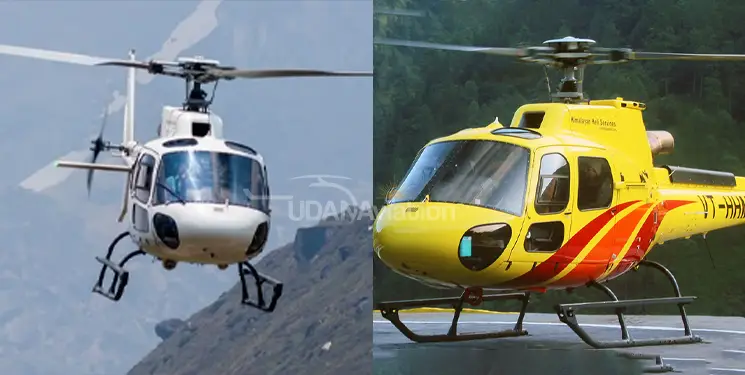
Which Helicopter Is Used for the Char Dham Heli Tour?
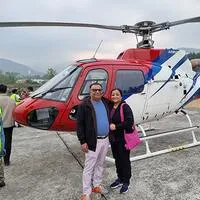
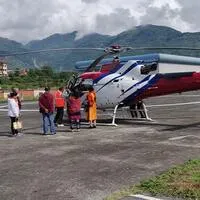
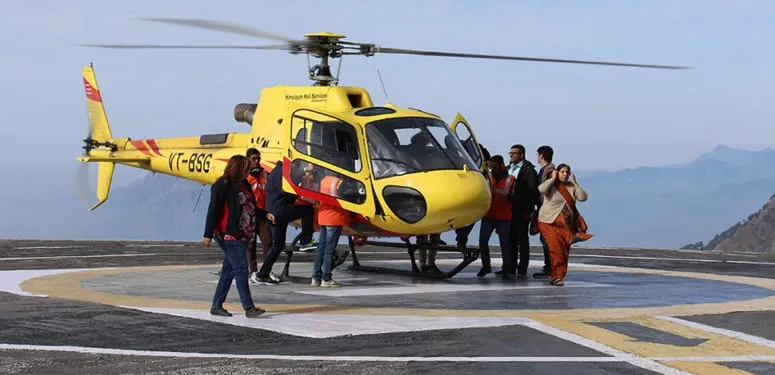
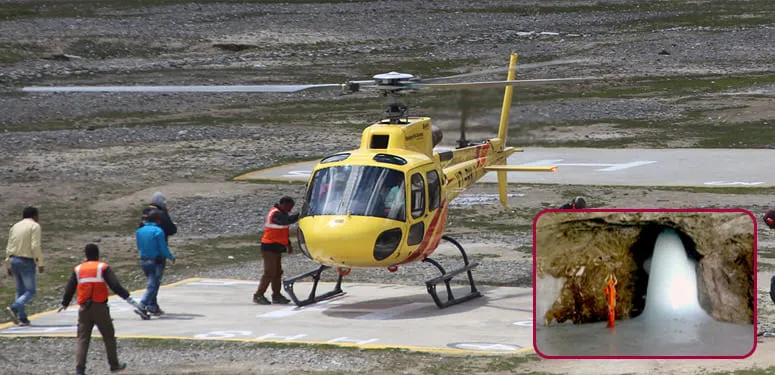
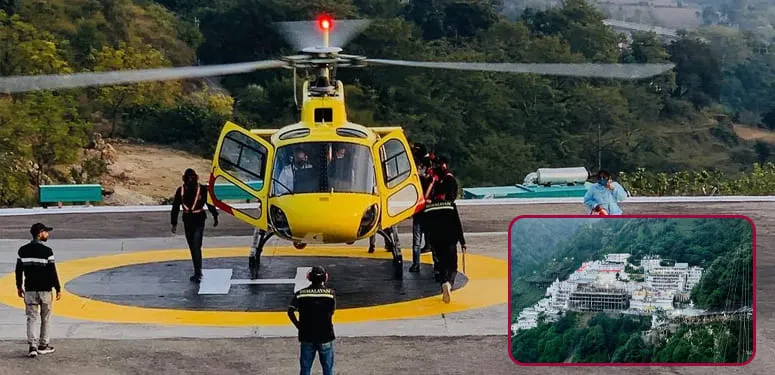
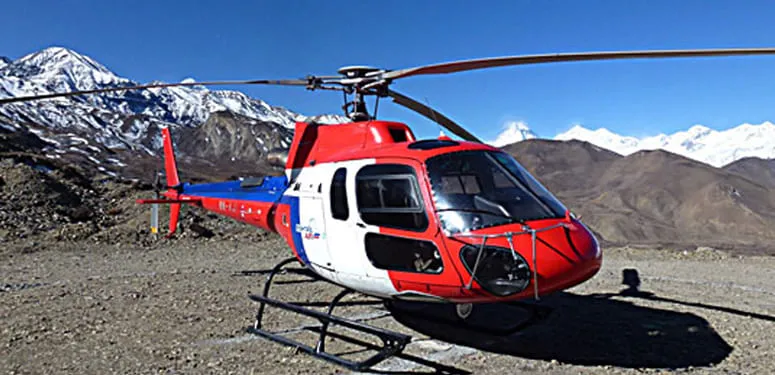
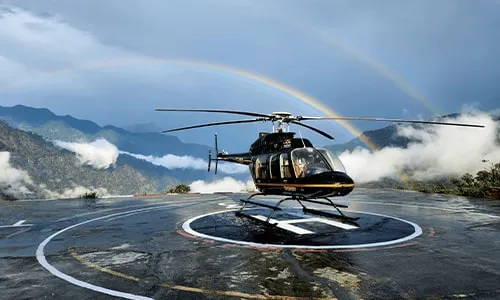
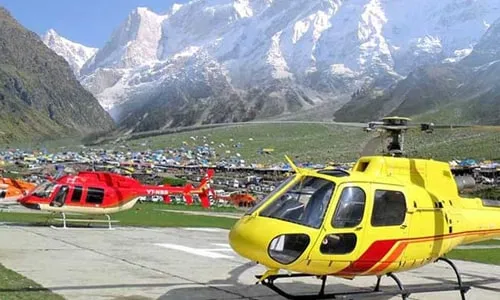
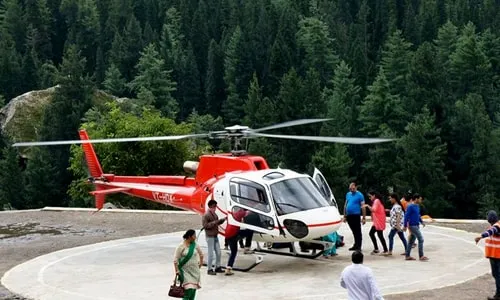
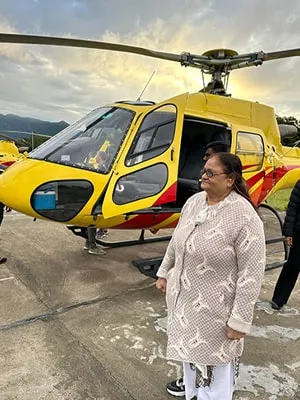
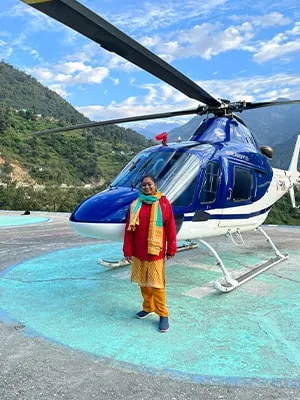
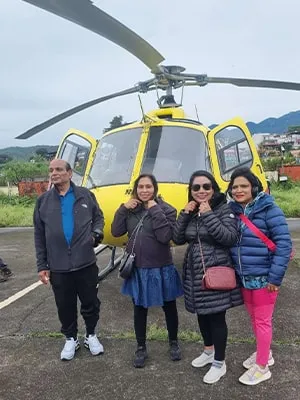
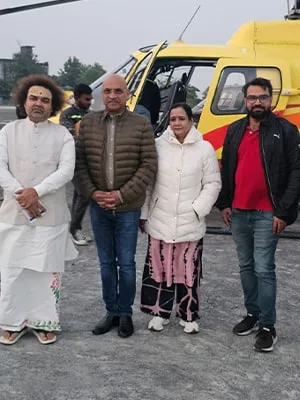
The helicopters used for Char Dham Yatra charters in Uttarakhand are mainly the Bell 407 and the Eurocopter AS350 B3 (Airbus H125). Both are single-engine turbine helicopters suited to high-altitude mountain operations. The AS350 B3 in particular is widely used at Kedarnath because of its performance above 3,500 metres.
| Model | Type | Capacity | Why Used on This Route |
|---|---|---|---|
| Eurocopter AS350 B3 (Airbus H125) | Single-engine turbine | Up to 6 passengers | Strong high-altitude performance; used at Kedarnath helipad. |
| Bell 407 | Single-engine turbine | Up to 6 passengers | Reliable mountain operations, good passenger comfort for longer legs. |
All helicopters on the Char Dham route go through mandatory maintenance checks before each flight season, and pilots must meet the 2026 hill-flying minimums listed above. The specific helicopter assigned to your flight depends on operational availability on that day. Both models are cleared for the full Char Dham circuit.
Starting Point: Sahastradhara Helipad, Dehradun
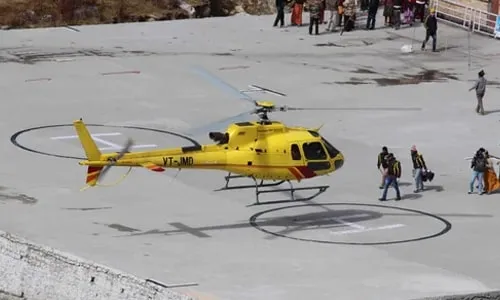
All Udan Aviation Char Dham helicopter flights depart from Sahastradhara Helipad, Dehradun, the main base for Char Dham charter operations in Uttarakhand.
Getting to the helipad from major cities:
| Coming From | How to Reach Sahastradhara Helipad, Dehradun |
|---|---|
| Delhi | By road: about 2.5 to 3 hours on the Delhi-Dehradun Expressway (opened April 2026), depending on traffic. By train: Shatabdi or Vande Bharat from New Delhi to Dehradun railway station, then taxi (about 30 min). By air: fly to Jolly Grant Airport, Dehradun, then about 45 minutes to an hour by road. |
| Haridwar | By road or taxi: about 65 to 70 km, 1.5 to 2 hours. Udan Aviation can arrange pickup from Haridwar. |
| Rishikesh | By road or taxi: about 45 to 50 km, 1 to 1.5 hours. Udan Aviation can arrange pickup from Rishikesh. |
| Mumbai / Chennai / Bengaluru / Kolkata / Hyderabad | Fly to Jolly Grant Airport, Dehradun (direct flights or via Delhi), then about 45 minutes to an hour by taxi to Sahastradhara Helipad. |
Road times are approximate and depend on traffic. Whatever your origin city, reach Dehradun on Day 1. Don't plan to travel on the morning of your first flight; early departures leave no room for travel delays.
Char Dham Yatra by Helicopter vs by Road: Honest Comparison
| Parameter | By Helicopter | By Road |
|---|---|---|
| Total Duration | 6 Days | 10 to 12 Days |
| Cost Per Person | ₹2,20,000 (see inclusions and exclusions) | About ₹30,000 to ₹90,000 (varies widely by operator and hotel category) |
| Physical Effort | Low: pony or doli at Yamunotri, short walks at Kedarnath and the temples | Significant: treks at Yamunotri and Kedarnath, long mountain drives |
| Suitable for 60+ pilgrims | Yes, with medical clearance | Depends on health and fitness level |
| Darshan Queue | Darshan assistance; waiting time depends on temple rules and crowds | Open queue: 4 to 6 hours in peak season |
| Kedarnath Trek | Not required: fly directly | About 16 to 18 km each way on foot, horse, or palanquin |
| Weather Dependency | Moderate: flights can be delayed | High: road closures, landslides, rain can disrupt for days |
| Experience of the Himalayas | Aerial view: glacier and valley vistas | Ground-level mountain road driving, narrow roads |
| Best For | Senior citizens, NRIs, time-constrained, health conditions | Adventure seekers, those with time, budget-conscious pilgrims |
Neither option is objectively better; they serve different kinds of pilgrims. If you have the time, fitness, and budget for the road route, it's the traditional journey and has its own meaning. If any of those three factors is a constraint, the helicopter package is the most practical way to complete the Yatra.
The Four Dhams: Background
Yamunotri: 3,293 metres
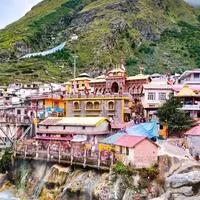
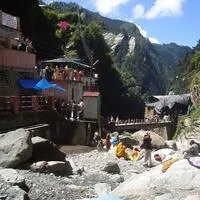
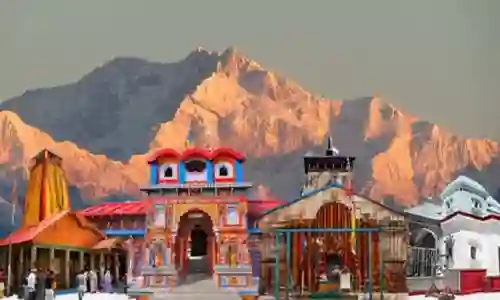
Source of the River Yamuna. Goddess Yamuna is the daughter of Surya Dev and twin sister of Yama. The state registration portal says the temple was originally built by Maharaja Pratap Shah of Tehri Garhwal. The present structure is commonly credited to a 19th-century rebuild by Maharani Guleria of Jaipur, after earthquake damage. The Surya Kund hot spring directly outside the temple, around 88°C, is where pilgrims cook rice wrapped in a cloth as an offering. The glacier origin of the Yamuna (Champasar Glacier, 4,421 metres) lies further up the mountain and is a separate trek, not included in this package.
Gangotri: about 3,100 metres
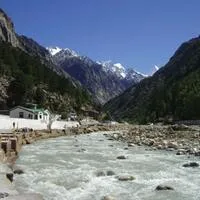
The Bhagirathi River flows from here before joining the Alaknanda to form the Ganga at Devprayag. King Bhagirath is believed to have performed tapasya here to bring the Ganga to earth to liberate his ancestors, and the river's name, Bhagirathi, comes from him. According to the state registration portal, the temple was built by the Gorkha commander Amar Singh Thapa and later renovated by the Maharaja of Jaipur. The actual glacier origin (Gaumukh) is about 18 to 19 km further up the valley and requires a separate trekking permit.
Kedarnath: 3,583 metres
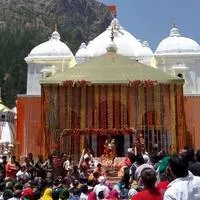
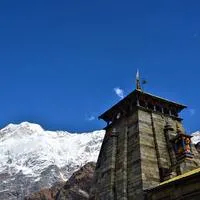
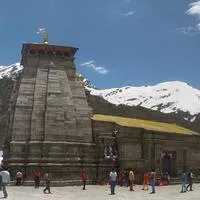
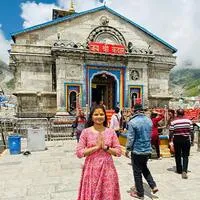
One of the 12 Jyotirlingas of Lord Shiva. By tradition, the Pandavas built the original temple and Adi Shankaracharya rebuilt it in the 8th century. He is believed to have attained mahasamadhi near the temple, and his samadhi behind the temple is open for darshan. The 2013 floods and landslides destroyed much of the surrounding area, but the centuries-old stone temple stood. The large boulder that came to rest behind the temple during the disaster, widely believed to have shielded the structure, is visible today.
Badrinath: 3,133 metres
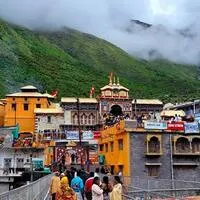
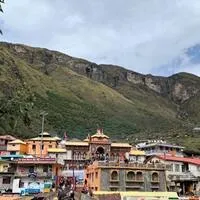
Dedicated to Lord Vishnu in his Badrinarayan form, meditating under a Badri (wild plum) tree. Adi Shankaracharya is believed to have recovered the idol from the Alaknanda River and installed it in the temple in the 8th century. It is part of both the Char Dham and Panch Badri circuits, and one of the 108 Divya Desams. The Tapt Kund outside, a natural hot spring at around 45°C, is where pilgrims bathe before darshan. Mana Village nearby is marked by the government as the "First Indian Village" on this border and carries its own Mahabharata-era mythology.
Why Udan Aviation
- Fixed daily departures: Your confirmed date does not depend on someone finding you a spare seat.
- One accountable team: Udan Aviation manages flight timings, helipad handling, hotels, transfers, darshan coordination and on-trip support. Our NSOP partner operates the aircraft.
- Hotels checked by our team: Every property on the list has been visited for cleanliness, food and how it treats pilgrims.
- Written policies: Weight, weather, cancellation and refund terms are shared in writing before you pay.
- Time at each Dham: The itinerary leaves room for darshan and sightseeing at every Dham, so no stop is a quick touch-and-go.
Packing Tips for Char Dham Helicopter Tour
Your entire luggage on the helicopter is 5 kg in a soft duffel bag. Here's how to pack it well (there is a longer list in what to pack for your Char Dham helicopter journey):
Clothing (most important category, don't underpack this):
- 2 sets of thermal innerwear: essential even in May and June at Kedarnath and Badrinath
- 1 fleece or woollen sweater
- 1 windproof/waterproof outer jacket: light but warm
- 2 sets of regular clothes for temple visits (comfortable, loose-fitting)
- 1 dupatta or head covering for temples
- Comfortable walking shoes with grip, not sandals
- 1 pair of warm socks
Health and Medicines (do not skip):
- Prescribed medications for any existing condition, with extra supply
- Altitude sickness medication (Diamox if prescribed by doctor)
- Paracetamol, antacids, oral rehydration salts (ORS)
- Bandages and antiseptic cream for basic first aid
- Sunscreen SPF 50+: UV is intense at high altitude
- Lip balm: air is very dry at 3,000+ metres
Essentials:
- Sufficient cash: ATMs at the Dhams are few and often out of service or out of cash. Plan on ₹5,000 to ₹8,000 in cash beyond what the package covers
- Power bank (10,000 mAh minimum): charging points are scarce at most Dhams
- Water bottle: refill at hotels; avoid buying plastic at the Dhams
- Sunglasses: UV protection at altitude is necessary
- Small torch or headlamp for early morning temple visits
- Dry snacks (energy bars, nuts, dates) for the time between meals and during temple queues
- Jio or BSNL SIM card: other networks don't work reliably at Harsil and Badrinath. Get one before leaving Dehradun
- ID, registration QR pass and emergency contact numbers written on paper, in a waterproof pouch
Leave your main suitcase at the Dehradun hotel. It's stored safely and returned to you when you come back on Day 6. Only the 5 kg duffel goes on the helicopter.
Dos and Don'ts
Do:
- Cover your head before entering every temple and remove footwear at the entrance
- Tell your Udan Aviation ground contact immediately if you feel breathless, dizzy, or unusually headachy. Don't try to push through altitude symptoms
- Eat regularly even if you're not hungry. Altitude suppresses appetite but your body still needs fuel
- Tell us at booking if you want a special puja, such as Rudrabhishek at Kedarnath or Maha Abhishek at Badrinath. These fill up fast and need advance arrangement
Don't:
- Carry non-vegetarian food or alcohol, which are not permitted during the Yatra
- Use phones or cameras inside temple premises. At Kedarnath, mobile phones and photography inside the temple premises are banned
- Litter on any route, helipad, or near any temple. Carry your waste
- Rush at Yamunotri. The pony ride and some walking are still involved. Take your time
Passenger Details Required at Booking
- Full name as on government ID
- Date of birth, age, and gender
- Home address
- Aadhaar Card for Indian nationals
- Passport for foreign nationals and NRIs
- Accurate body weight of each passenger
- Gotra, only if you want a special puja booked (the priest uses it for the sankalp)
Payment Terms
To confirm the package, deposit 30% of the tour cost. The balance is payable 40 days before the date of travel. For May and June dates, book well before that 40-day window.
Infant Policy
Infants below 2 years / 12 kg are carried free of charge. In case of verification of age, ID proof or birth certificate of the child shall be checked. Children above the age of 2 years will be considered full ticket.
Arrival Date
Day 1 of the tour is your arrival day in Dehradun. The first helicopter boarding is early on Day 2, around 6 AM, so arriving on Day 1 gives you time for the briefing and a night's rest.
Example:
- If Day 1 of your tour is 9th May, reach Dehradun on 9th May.
- Your first helicopter flight will be on the morning of 10th May.
Ending Date
As this is an NSOP (Non-Scheduled Operator Permit) flight, timings are tentative and subject to permissions and weather conditions. To avoid problems from weather changes, operational delays, or technical issues, we strongly recommend keeping one buffer day and booking your return flight or train for the day after your scheduled tour end date.
Example:
- If your tour ends on 14th May (Day 6), plan your return on 15th May, not on the same day.



 Call
 WhatsApp
 Check