Experience the mystic nature of India with the holy pilgrimage of Chardham. Spiritualism and belief on the Almighty are the real soul of India. Since ancient time, to attain salvation, people go for the Chardham Yatra.
The holy tour mainly comprises of four religious places as well as the nearby sacred regions. Gangotri is one of the most popular and sacred shrines for the devotees, located at approximately 3,100 metres above sea level in Uttarakhand.
In the last week of April or first week of May, this sacred shrine is opened for the devotees. According to the lunar Hindu calendar, on the auspicious day of Akshaya Tritiya the date falls. With the opening of the main door, puja and Aarti are performed for the holy river Ganga.
The holy puja is performed at two places — at the banks of the holy river and within the temple premise. Until the festival of lights, Diwali, the temple remains open and closure is done by a ceremony amidst dazzling oil lamps.
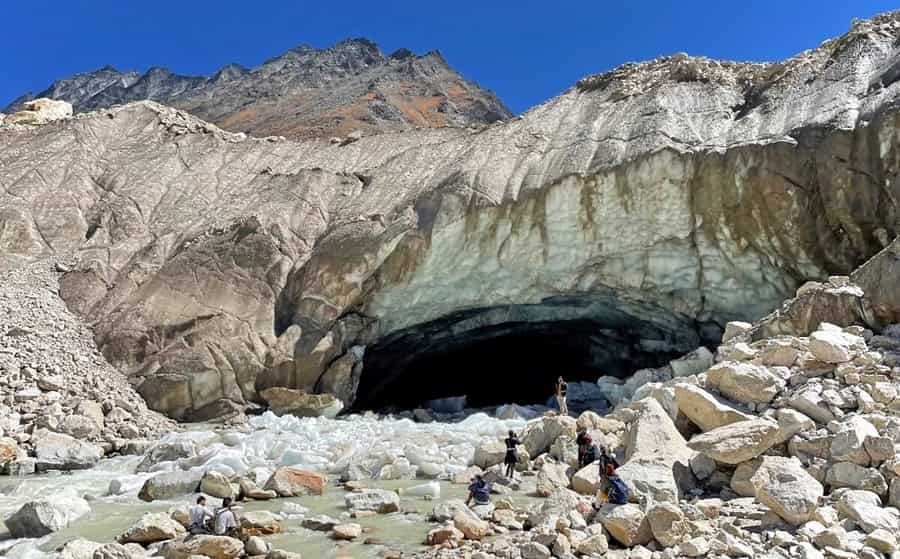
The holy river Ganges originates from the Gaumukh glacier, 19 km from Gangotri. To witness the mesmerizing glacier, pilgrims perform this tough climb.
⚡ Gangotri Temple – Quick Facts: Location: Uttarkashi district, Uttarakhand | Altitude: ~3,100 m (10,200 ft) | River: Bhagirathi (becomes Ganga at Devprayag) | Gaumukh: 19 km from Gangotri | Opening 2026: April 19 (Akshaya Tritiya) | Best time: May–June & September–October | Managed by: Semwal family (pujaris).
Gangotri Temple Opening and Closing Dates 2026
| Event | 2026 Date | Details |
| Temple Opens | April 19, 2026 (Akshaya Tritiya) | Deity idol brought from Mukhba village; opening puja performed |
| Summer season | April 19 – June 30, 2026 | Best time: May–June; clear skies, manageable weather |
| Monsoon (limited visits) | July 1 – September 14, 2026 | Avoid July–August; landslide risk on roads |
| Post-monsoon season | September 15 – October 31, 2026 | Post-monsoon clarity; excellent weather; fewer crowds |
| Temple Closes | On Diwali (October/November, date announced) | Deity moved to Mukhba for winter; temple closed till next Akshaya Tritiya |
Note: The exact closing date of Gangotri Temple is announced annually by the temple committee based on Diwali’s date on the Hindu calendar. Always verify the current season’s closing date before planning a late October or November visit.
Salvation Importance of Gangotri
The holy pilgrim Gangotri is a sacred place where Kedar Ganga arrives with the Bhagirathi River at Dev Ghat. Amar Singh Thapa, a Gorkha commander, built the original Gangotri temple in the early 18th century.
The temple underwent extensive reconstruction by the Dynasty of Jaipur in Rajasthan, and eventually the current structure came into existence.
From the months of May to October, thousands of pilgrims mark their visit to this holy shrine. The ritual duties of the temple are supervised by the Semwal family of pujaris, whose priests hail from the Mukhba village.
The holy shrine holds huge religious significance. Pilgrims take the sacred water of River Ganges in cans and offer it to Lord Shiva.
According to popular mythological belief, the water of River Ganges is like nectar for Lord Shiva and soothes his throat, as he consumed poison (Halahala) to save the world.
The temple holds huge significance as King Bhagirathi pleased the God by praying hard to bring the Ganga from heaven to earth. He performed this tough task to make the soul of his predecessors at peace.
Religious Story of Gangotri
In order to pardon the predecessors of king Bhagiratha, the Goddess Ganga descended from heaven after 5,500 years of penance and came to Gangotri.
Lord Shiva took her in his matted locks to minimize the flow. Besides being known as Ganga, she is called Bhagirathi — owing to the penance of Bhagiratha.
According to the myths, king Sagar performed the Ashwamedha Yagna declaring his supremacy, accompanied by his 60,000 sons. Lord Indra, afraid of losing power, stole the horse and tied it to the ashram of Rishi Kapil.
During their search, the 60,000 sons went to Kapil Rishi’s ashram and were annihilated when the Rishi opened his eyes. Barring Asmanjas, all were reduced to ashes.
The grandson of king Sagar recovered the horse and learned that the 60,000 annihilated souls would attain heaven only if the holy Ganga descended and washed their ashes.
Both Anshuman and his son Dilip failed in this mission. However, his grandson Bhagirathi succeeded through exceptional meditation and penance.
His exceptional meditation brought Ganga from heavens to earth. Lord Shiva collected Ganga waters in his hair and released them in 7 streams after being happy with king Bhagiratha. Eventually the ashes of the 60,000 sons were touched by Ganga waters resulting in their peaceful abode in heaven.
Gangotri Temple – Architecture and Design
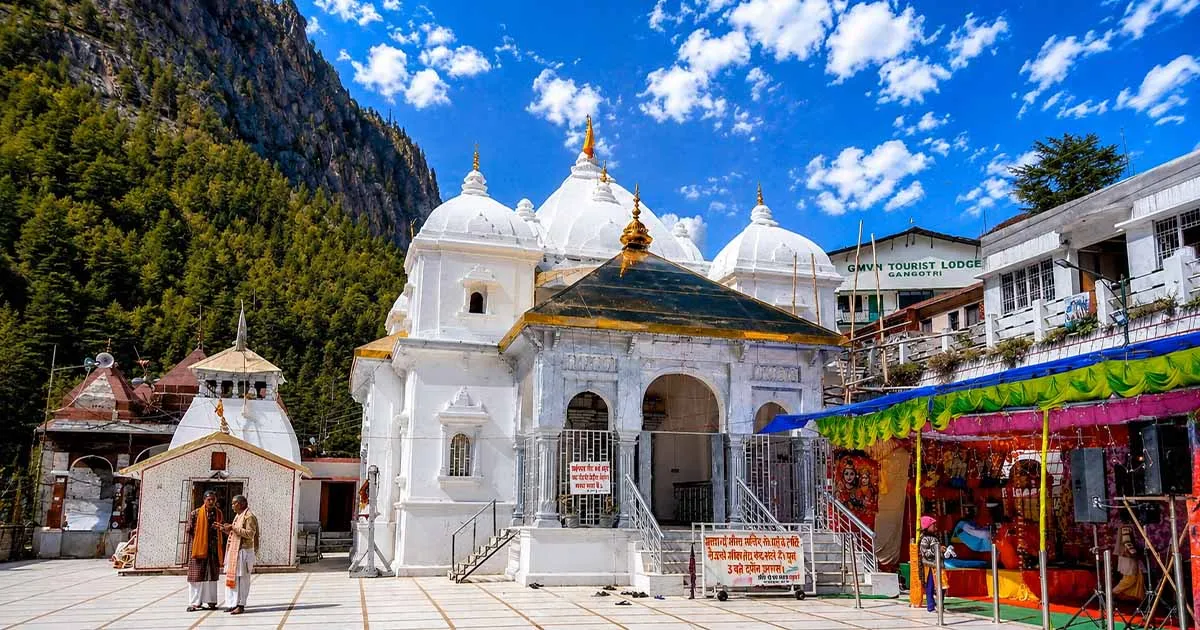
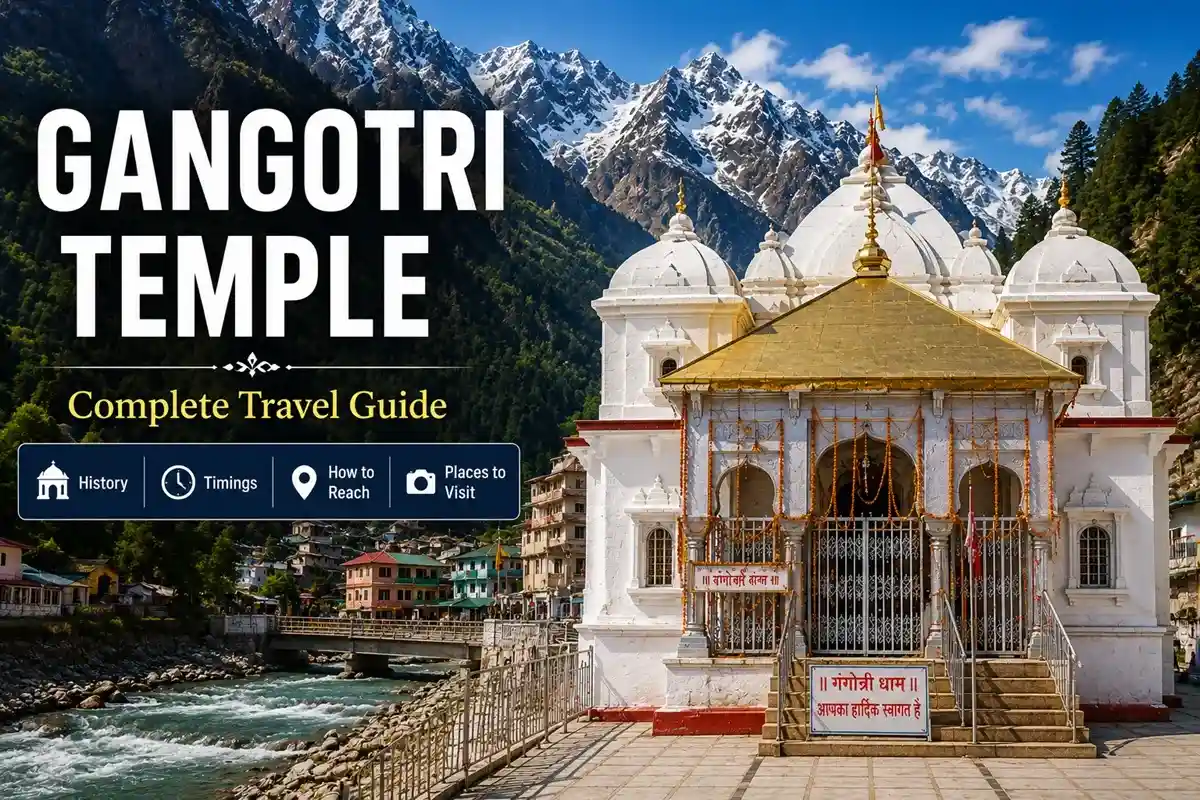
The Gangotri Temple is a stunning example of traditional Himalayan temple architecture. The temple is built on the right bank of the Bhagirathi River and its white exterior stands in beautiful contrast against the surrounding green deodar forests and snow-capped peaks.
- Style: Inspired by Nagara architecture with local Himalayan influences, designed to withstand the region’s harsh climate.
- Exterior: Constructed with white marble — the gleaming white facade is iconic and immediately recognizable.
- Shikhar (spire): The temple’s top is decorated with a kalash (sacred pot), symbolizing purity and divinity.
- Sanctum: Inside the main sanctum (garbhagriha), the deity Goddess Ganga is represented by a silver idol. Paintings on the inner walls depict the legend of Ganga’s descent to earth.
- Bhagirath Shila: A sacred rock near the temple where King Bhagirath is believed to have meditated. Pilgrims touch and worship this rock as part of their visit.
From Bhagirathi to Ganga – The Sacred Confluence at Devprayag
At Gangotri, the river is known as the Bhagirathi — named after King Bhagirath whose penance brought it to earth. The river continues its journey as the Bhagirathi through Uttarkashi, Tehri, and beyond.
The Bhagirathi meets the Alaknanda river at Devprayag, which is one of the Panch Prayag (five sacred confluences) of Uttarakhand. At this confluence, the two rivers merge and the combined river takes the name Ganga — the sacred river that flows through the plains of North India to the Bay of Bengal.
This is why Gangotri is revered as the source of the holy Ganga — even though the glacial origin is Gaumukh, 19 km away, the spiritual and geographical journey of the Ganga begins here.
Area, Population and Languages Spoken
The holy town of Gangotri is the central point of Char Dham Yatra tour and regarded as the abode of God. Amidst the snowcapped peaks of Himalayas, the town of Gangotri is positioned.
- Area: ~1 sq. km
- Altitude: ~3,100 metres (10,200 ft) above sea level
- Languages Spoken: Hindi, Garhwali and English
- Population: Approximately 110 permanent residents (Census 2011). The town’s population swells significantly during the yatra season (May–October) with pilgrims, priests, traders, and seasonal workers.
Correction: An earlier version of this article stated the population as 1,180. The correct figure per the Census of India (2011) is approximately 110 permanent residents. Gangotri is a very small seasonal settlement that comes alive only during the yatra season.
Best Time to Visit Gangotri Temple
In order to have a good time in the sacred shrine of Gangotri, it would be advisable to visit from May to June or September to October. The region is prone to heavy rainfall during July–August. Thus it would be safe to visit during the recommended months.
- May – June: Clear skies, pleasant weather, fresh snow on surrounding peaks. Peak pilgrimage season. Book accommodation in advance.
- September – October: Post-monsoon clarity, crisp skies, fewer pilgrims than May–June. Excellent for photography and peaceful darshan.
- July – August (Avoid): Peak monsoon. Heavy rainfall, landslides, road blockages. Not recommended.
- November onwards (Avoid): Temple closes on Diwali. No access after closure. The deity moves to Mukhba village for winter.
Correction: An earlier version of this article listed ‘September and November’ as best times. November is mostly after the Gangotri Temple closes for winter (on Diwali). The correct best times are May–June and September–October.
Gangotri Temple Darshan Timings
| Session | Timings | Notes |
| Morning Darshan | 6:15 AM – 2:00 PM | Best time for darshan; morning aarti at sunrise |
| Evening Darshan | 3:00 PM – 9:30 PM | Sandhya Aarti at ~7 PM; very spiritually vibrant |
| Ganga Aarti | ~7:00 PM daily | On the banks of Bhagirathi; don’t miss this |
| Mangal Aarti | ~6:00 AM daily | First aarti of the day; temple opening |
| Rajbhog Aarti | Afternoon | Special aarti in the main temple complex |
| Winter (closed) | October/November – April/May | Temple closed; deity at Mukhba village |
Markets at Gangotri
You can feel the essence of puja and sacred environment in the local shops, as it comprises of God statues along with all other things needed for worshipping. These local bazaars are full of sweet shops and souvenirs for the travelers.
Gaumukh Trek – The Actual Source of Ganga
The actual glacial origin of the Ganga is the Gaumukh glacier, situated 19 km from the Gangotri temple at an altitude of approximately 3,892 metres. The glacier is shaped like a cow’s mouth (Gau = cow, Mukh = mouth) — from which the Bhagirathi river emerges.
- Distance: 19 km one way from Gangotri
- Altitude of Gaumukh: ~3,892 metres
- Trek difficulty: Moderate to challenging; requires a permit from the Forest Department
- Duration: 1 day (most pilgrims do it as a day trip), or 2 days with an overnight stay at Bhojwasa (~3,775 m)
- Permit required: Yes — obtain from the Gangotri National Park office before starting the trek
- Best time: May–June and September–October; avoid monsoon season
Distance from Major Cities
| City / Place | Distance | Travel Mode |
| Delhi | ~490 km | Road via Rishikesh–Uttarkashi (~12–14 hrs) |
| Dehradun | ~250 km | Road via Rishikesh–Uttarkashi (~8–9 hrs) |
| Rishikesh | ~250 km | Road via Uttarkashi (~7–8 hrs) |
| Uttarkashi | ~100 km | Road (~3–4 hrs via Harsil Valley) |
| Chandigarh | ~410 km | Road via Dehradun–Rishikesh |
| Yamunotri | ~230 km | Road (via Barkot or Uttarkashi) |
| Haridwar | ~285 km | Road via Rishikesh–Uttarkashi (~8 hrs) |
Nearest Airport, Railway Station and Bus Stand
- Nearest Airport: Jolly Grant Airport (Dehradun) — approximately 250 km from Gangotri. Flights from Delhi and other cities. Taxi/cab from airport to Gangotri takes approximately 8–9 hours.
- Nearest Railway Station: Rishikesh Railway Station — approximately 250 km from Gangotri. Regular trains from Delhi (~5.5 hrs), Haridwar, and other cities. Take a cab/bus from Rishikesh to Gangotri (7–8 hrs).
- Nearest Bus Stand: State buses from Uttarkashi, Rishikesh, and Haridwar run regularly during the yatra season. Private taxis and shared cabs are widely available from Rishikesh and Uttarkashi.
Places to Visit Near Gangotri Temple
- Gaumukh Glacier: 19 km trek from Gangotri. The glacial source of the Bhagirathi River. Requires a Forest Department permit.
- Tapovan Meadow: 14 km beyond Gaumukh (33 km total from Gangotri). A high-altitude meadow at ~4,460 m with stunning views of Shivling peak.
- Bhagirath Shila: The sacred rock where King Bhagirath is believed to have meditated to bring Ganga to earth. Located near the Gangotri temple.
- Harsil Valley: 25 km from Gangotri at 2,620 m. A serene valley with apple orchards, deodar forests, and the Harsil Helipad (starting point for Gangotri helicopter yatra).
- Gangotri National Park:5 km from the temple. Home to Snow Leopard, Blue Sheep, Himalayan Monal, Musk Deer, and Brown Bear. Established in 1989; 2,390 sq km.
- Surya Kund: A natural kund (pool) 500 m from the temple. Also notable: Brahma Kund and Vishnu Kund near the temple premises.
Practical Travel Tips for Gangotri Yatra 2026
- Best time: May–June and September–October. Weekdays are calmer than weekends.
- Altitude: At 3,100 m, mild altitude sickness is possible. Spend 1 night at Uttarkashi (1,165 m) to acclimatise before proceeding to Gangotri.
- No trekking to temple: Unlike Yamunotri or Kedarnath, the Gangotri Temple is road-accessible. Vehicles park ~500 m from the temple entrance — an easy, level walk.
- Clothing: Carry warm layers even in summer. Temperatures drop sharply at night (5–10°C in May–June; below 0°C in October).
- Accommodation: Hotels, ashrams, and dharamshalas available in Gangotri town. Book in advance for May–June. More options in nearby Harsil and Uttarkashi.
- Mobile connectivity: BSNL and Jio work in Gangotri. Other networks may have weak or no signal.
- ATM: No ATMs in Gangotri. Carry sufficient cash from Uttarkashi (nearest ATM point).
- Helicopter option: Gangotri Yatra by helicopter from Sahastradhara Helipad, Dehradun, covers the Gangotri leg via Harsil Helipad. Ideal for senior citizens.
Conclusion
Gangotri Dham is one of the most sacred shrines in Hinduism — the spiritual origin of the holy Ganga River. Nestled at approximately 3,100 metres in the Uttarkashi district of Uttarakhand, the Gangotri Temple is a place where spirituality, mythology, and Himalayan beauty converge.
Whether you come for the sunrise Mangal Aarti, the evening Ganga Aarti on the banks of the Bhagirathi, or the trek to Gaumukh glacier — Gangotri offers a deeply moving pilgrimage experience. Plan your visit in May–June or September–October, carry warm clothes, and begin your journey early for the best experience.
Frequently Asked Questions (FAQs) – Gangotri Temple
Q1. What is the altitude of Gangotri Temple?
Gangotri Temple is situated at approximately 3,100 metres (10,200 feet) above sea level on the right bank of the Bhagirathi River, in the Uttarkashi district of Uttarakhand. It is one of the highest accessible temples in the Char Dham circuit.
Q2. When does Gangotri Temple open and close in 2026?
Gangotri Temple opened on April 19, 2026 (Akshaya Tritiya). The temple closes on Diwali (October/November) — the exact closing date is announced annually by the temple committee. The deity moves to Mukhba village for the winter months and returns on the next Akshaya Tritiya.
Q3. What is the best time to visit Gangotri Temple?
May to June and September to October are the best months. May–June offers clear skies, fresh snow on peaks, and pleasant weather. September–October brings post-monsoon clarity with fewer crowds. Avoid July–August (monsoon, landslide risk) and November onwards (temple closed).
Q4. How far is Gaumukh from Gangotri?
Gaumukh, the glacial source of the Bhagirathi River, is 19 km from Gangotri at an altitude of approximately 3,892 metres. The trek takes 6–8 hours one way. A Forest Department permit is mandatory. Most trekkers go as a day trip or stay overnight at Bhojwasa (~3,775 m).
Q5. Who built the Gangotri Temple?
The original Gangotri Temple was built by Amar Singh Thapa, a Gorkha military commander, in the early 18th century. The temple was later extensively reconstructed and renovated by the royal dynasty of Jaipur. The current structure reflects this restoration work.
Q6. Why is the river called Bhagirathi at Gangotri?
At Gangotri, the river is called Bhagirathi — named after King Bhagirath, whose extraordinary penance and meditation brought the Ganga from heaven to earth. The river flows as the Bhagirathi until it meets the Alaknanda at Devprayag, where both rivers merge and the combined river takes the name Ganga.
Q7. How to reach Gangotri from Delhi?
From Delhi: take a train or bus to Rishikesh or Haridwar (~5–6 hrs), then hire a taxi or take a shared cab to Gangotri via Uttarkashi (~7–8 hrs). Total journey from Delhi: approximately 12–14 hours by road (~490 km). Jolly Grant Airport (Dehradun) is the nearest airport (~250 km from Gangotri).
Q8. What are the darshan timings at Gangotri Temple?
Morning darshan: 6:15 AM to 2:00 PM. Evening darshan: 3:00 PM to 9:30 PM. The Mangal Aarti is at approximately 6:00 AM and the Ganga Aarti on the riverbank is at approximately 7:00 PM. The evening Ganga Aarti is a deeply spiritual experience and should not be missed.
Q9. Is Gangotri accessible by road or is trekking required?
Gangotri Temple is accessible by road — vehicles park approximately 500 metres from the temple entrance, which is a gentle, level walk. No trekking is required to reach the temple itself. This makes it accessible for pilgrims of all ages and physical abilities.
Q10. What is the population of Gangotri?
Gangotri has approximately 110 permanent residents as per the Census of India (2011). It is a very small, high-altitude seasonal settlement. During the yatra season (May–October), the population swells significantly with pilgrims, priests, traders, and seasonal workers.
Q11. What is the significance of Gangotri in Hindu religion?
Gangotri is one of the four sacred dhams of the Chota Char Dham Yatra in Uttarakhand, revered as the earthly origin of the Goddess Ganga.
The temple is dedicated to Goddess Ganga. Taking a dip in the Bhagirathi River here is believed to wash away sins and grant moksha (salvation).
Q12. What should I carry for the Gangotri Yatra?
Carry warm layers (even in summer — nights are cold), waterproof jacket, sturdy walking shoes, sunscreen, sunglasses, personal medications, first aid kit, and altitude sickness medication (Diamox, on prescription). Carry enough cash from Uttarkashi — there are no ATMs at Gangotri. Also carry your Chardham Yatra registration voucher.
Q13. Can I visit Gangotri and Gaumukh in one day?
You can visit the Gangotri temple in a few hours. However, a round trip to Gaumukh (19 km each way, total 38 km) is a full-day or 2-day undertaking. The trek is moderate to challenging and requires a Forest Department permit. For the Gangotri temple darshan only, one day is sufficient.
Q14. Is there a helicopter service for Gangotri Yatra?
Yes. Gangotri Yatra by helicopter departs from Sahastradhara Helipad, Dehradun and lands at Harsil Helipad, approximately 25 km by road from the Gangotri temple. A cab/taxi is included in the package for the temple transfer. This is ideal for senior citizens and those with limited time. Udan Aviation operates this service.
Q15. What is the winter seat of Gangotri Temple?
When the Gangotri Temple closes on Diwali, the deity (idol of Goddess Ganga) is ceremonially moved to the Mukhyamath Temple in Mukhba village, approximately 20 km downstream at 2,620 m altitude. Mukhba is near Harsil. The deity returns to Gangotri on the next Akshaya Tritiya, marking the reopening of the temple.
Q16. What is the Gangotri National Park?
Gangotri National Park is a protected wildlife area established in 1989, covering 2,390 sq km in Uttarkashi district. Located 1.5 km from the Gangotri temple.
The park is home to Snow Leopard, Blue Sheep, Himalayan Monal, Musk Deer, and Brown Bear. It is also a gateway to high-altitude treks including Gaumukh and Tapovan.
Q17. What is Bhagirath Shila at Gangotri?
Bhagirath Shila is a sacred rock near the Gangotri temple where King Bhagirath is believed to have meditated for thousands of years to bring the Ganga to earth. Pilgrims touch and worship this rock as part of the Gangotri darshan. It is one of the most revered spots at the entire pilgrimage site.
Q18. How is the Gangotri Temple built and what does it look like?
The Gangotri Temple features a white marble exterior in the Nagara architectural style with local Himalayan influences. The shikhar (spire) is topped with a kalash.
Inside the sanctum, the deity Goddess Ganga is represented by a silver idol. The white temple against deodar forests and Himalayan peaks is one of the most iconic sights of Uttarakhand.
Q19. Is Char Dham Yatra registration required for Gangotri?
Yes. All pilgrims undertaking the Char Dham Yatra — including those visiting Gangotri — must complete the mandatory Chardham Yatra online registration. Your registration voucher and Yatra ID are checked at various points on the route. Most helicopter tour operators assist with registration as part of their package.
Q20. What is special about the evening Ganga Aarti at Gangotri?
The evening Ganga Aarti at Gangotri is performed on the banks of the Bhagirathi River at approximately 7:00 PM. Priests perform the aarti with large lamps to the sound of conch shells and chanting.
The setting — the rushing Bhagirathi, deodar forests, evening sky, and distant Himalayan peaks — makes this one of the most spiritually moving aarti experiences in India.