Choosing the wrong month for Char Dham Yatra can turn a lifelong dream into a logistical nightmare. Rain-blocked roads, cancelled helicopter flights, overcrowded temples, or arriving after the kapat (doors) have already closed — all of these happen to pilgrims who plan without checking the season first. The good news: once you understand how each season affects the four dhams, the decision becomes straightforward.
In 2026, the Chardham Yatra season opens earlier than usual — Yamunotri and Gangotri on 19 April, Kedarnath on 22 April, and Badrinath on 23 April. This guide breaks down every season honestly so you can pick the right time for your yatra.
Best Time for Chardham Yatra 2026
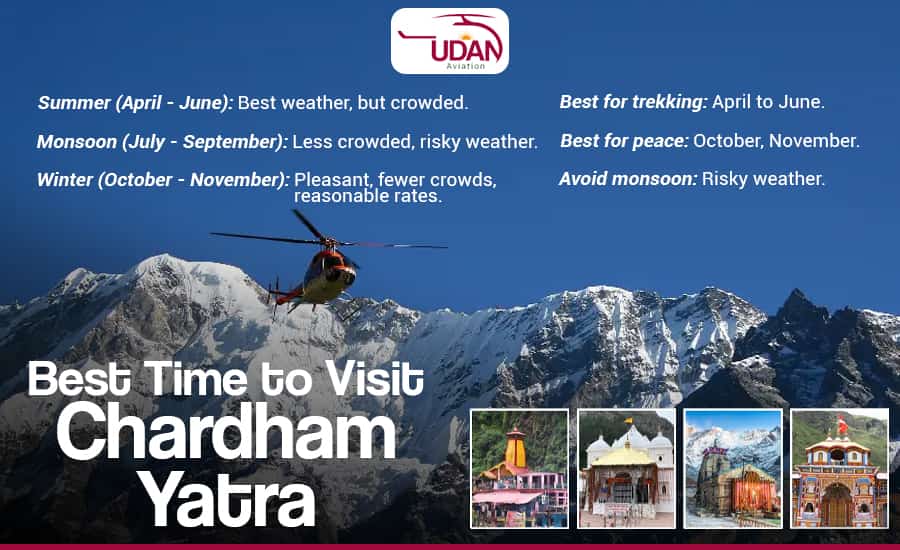
The best months are May–June and September–October. May–June offers the clearest weather and fully operational infrastructure. September–October offers smaller crowds, post-monsoon clarity, and reasonable accommodation rates. Avoid July–August (monsoon: landslides, road closures, helicopter suspensions). The 2026 season opens 19 April and temples close in November.
Opening and Closing Dates
| Temple | Opening Date 2026 | Closing Date 2026 (Tentative) | Winter Abode |
| Yamunotri | 19 April 2026 (Akshaya Tritiya) | 11 November 2026 (Bhai Dooj) | Kharsali |
| Gangotri | 19 April 2026 (Akshaya Tritiya) | 10 November 2026 (Day after Diwali) | Mukhba Village |
| Kedarnath | 22 April 2026 at 8:00 AM | 11 November 2026 (Bhai Dooj) | Ukhimath |
| Badrinath | 23 April 2026 | Mid-November 2026 (announced in October) | Joshimath |
Season-by-Season Breakdown
Late April to June – The Peak Season
This is the most popular window and for good reason. After the kapat open in late April, the trails are mostly clear of snow, the weather is stable at 15–20°C during the day, and all infrastructure — GMVN guesthouses, pony services, helipad operations — is fully functional from day one.
In 2026 this window starts earlier than 2025. Pilgrims visiting in the last two weeks of April may encounter residual snow on the Kedarnath trek (Gaurikund to temple). Waterproof shoes and gaiters are recommended for pre-May visits.
- Temperature: 15–20°C daytime; 4–8°C nights at high altitude
- Helicopter: Fully operational from 21 April 2026 for Kedarnath
- Crowds: High from May onward; opening fortnight (19–30 April) is relatively peaceful
- Accommodation: Book GMVN properties at gmvnonline.com at least 3–4 weeks ahead for May–June
- Helicopter booking: heliyatra.irctc.co.in — May–June slots sell out within hours of opening
Practical note: If you want the best of both worlds — good weather AND manageable crowds — target late April to first week of May. The yatra has just opened, temples are less crowded, and the valley is at its freshest.
July to August – Monsoon Season (Avoid for Most Pilgrims)
Monsoon brings lush green beauty to the Himalayan valleys — but also daily rain, frequent landslides, and road closures that can strand pilgrims for days. This is the most unpredictable window for Chardham Yatra.
Helicopter operations are significantly reduced in July–August. Flights are weather-dependent and morning cancellations are common. IRCTC suspends or heavily limits Kedarnath helicopter slots during peak monsoon weeks.
- Temperature: 10–20°C; humid; heavy rainfall
- Helicopter: Reduced operations; high cancellation rate; not recommended
- Roads: Frequent closures due to landslides on Rishikesh–Badrinath and Rishikesh–Kedarnath highways
- Crowds: Significantly lower — darshan queues are short for those who do make it
- Budget: Lowest accommodation rates of the season
Who should still consider it: Experienced mountain travelers, backpackers, and those who have already done the yatra and want to see the valley in its greenest form. First-timers, senior citizens, and those with fixed travel windows should avoid July–August.
September to October – The Best-Kept Secret
This is the period experienced pilgrims swear by. Monsoon recedes by mid-September, the skies clear, and the Himalayan peaks appear in sharp relief against blue skies. Crowds drop noticeably after October 1st. The air is crisp, darshan queues are shorter, and accommodation rates are reasonable.
September–October is also when the Brahma Kamal (sacred high-altitude lotus) blooms near Kedarnath and Hemkund Sahib — a sight most summer visitors never see.
- Temperature: 8–15°C daytime; 0–5°C nights at high altitude
- Helicopter: Fully operational; morning slots have the highest completion rate
- Crowds: Moderate in September, dropping further in October
- Accommodation: Rates are reasonable; availability better than peak season
- Warning: Nights get very cold by mid-October. Carry thermals even if daytime feels manageable
Best October window: First two weeks of October before temperatures drop sharply. By late October, nights at Kedarnath and Badrinath can dip below -2°C.
November – Last Window Before Closing
November is the final month before all four temples close for winter. The atmosphere is deeply devotional — smaller crowds, colder air, and the anticipation of the kapat closing ceremonies which draw thousands of devotees. Gangotri closes on 10 November, Yamunotri and Kedarnath on 11 November (both tentative), and Badrinath a few days later.
- Temperature: 2–10°C daytime; sub-zero nights possible at Kedarnath and Badrinath
- Helicopter: Operational but with increasing weather cancellations
- Roads: Snow risk on higher sections from mid-November onward
- Special experience: Attending the kapat closing ceremony at Kedarnath or Badrinath is one of the most emotionally powerful yatra experiences — but requires precise planning
Month-by-Month Weather and Season Summary
| Month | Temperature | Weather | Season Type | Crowd Level | Recommended |
| April 19–30 | 10–18°C | Cold; snow possible on trail | Opening fortnight | Low | ✓ Yes |
| May | 15–22°C | Pleasant; clear | Peak season | Very High | ✓ Yes |
| June | 15–22°C | Pleasant; pre-monsoon risk late June | Peak season | Highest | ✓ Yes |
| July | 12–20°C | Monsoon; heavy rain | Off-season | Low | ✗ Avoid |
| August | 12–20°C | Peak monsoon; landslides | Off-season | Low | ✗ Avoid |
| September | 10–18°C | Improving; clears mid-month | Shoulder season | Moderate | ✓ Yes |
| October | 5–15°C | Clear; crisp; cold nights | Second peak | Moderate-Low | ✓ Best |
| November | 2–10°C | Cold; snow risk from mid-Nov | Closing month | Very Low | ✓ (early Nov only) |
Best Time for Chardham Yatra by Helicopter
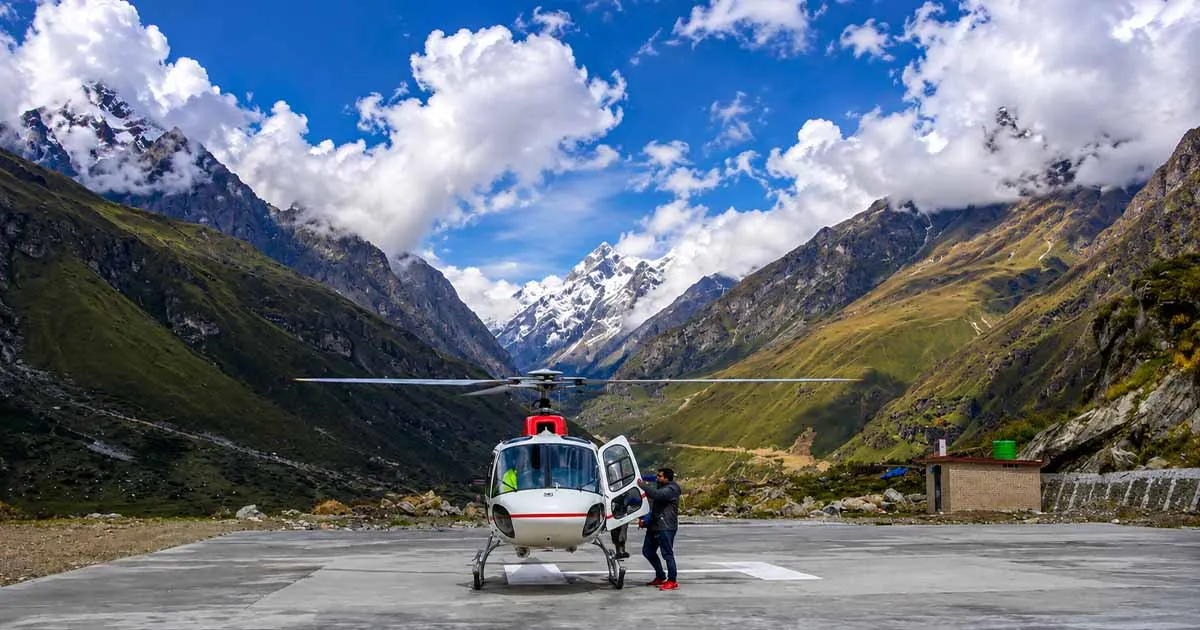
If you are doing the yatra by helicopter, the season rules are stricter. Helicopter operations are governed by weather windows — and mountain weather is less predictable than ground conditions.
- Best months for helicopter: Late April–June and September–October (morning slots only)
- Avoid: July–August — IRCTC suspends or heavily limits Kedarnath slots; cancellation rate is highest
- Morning slots (7–10 AM departure) have the highest completion rate across all seasons — afternoon cloud formation is the primary cause of cancellations
- Book Kedarnath helicopter at heliyatra.irctc.co.in — 2026 bookings opened 11 April 2026
- 2026 fares: Sirsi ₹6,086 | Phata ₹9,680 | Guptkashi ₹12,154 (return, per person + GST)
What most people don’t realize: A helicopter flight cancelled due to weather does not automatically get a refund within 24 hours of departure. Book your preferred slot early, and build one buffer day into your itinerary before any connecting flights home.
From Practical Experience: What Each Season Actually Feels Like
May in Kedarnath — darshan queues at 4 AM are already forming. The stone temple in the early morning mist, bells ringing, hundreds of pilgrims who’ve trekked 16 km through cold mountain air. The energy is electric. But finding a guesthouse at Gaurikund without a prior booking on a May weekend? Nearly impossible.
October in Badrinath is a different experience entirely. The same temple, half the crowd, sharper mountain air, and the Nilkantha peak cutting through a genuinely blue sky. The Brahmakapal ghats in early morning, nearly quiet. That version of Badrinath rewards pilgrims who plan with patience.
July at Gangotri — we’ve seen pilgrims stuck for 36 hours when a landslide on NH-94 closed the Uttarkashi–Gangotri stretch. The temple was open, the darshan was peaceful, but the road was not. If you choose monsoon, carry cash for extra nights and do not book return transport on the same day as your darshan.
Common Mistakes in Timing the Chardham Yatra
- Booking flights home on the same day as helicopter yatra — weather delays can push your departure by 1–2 days
- Planning July–August without checking road status — the Rishikesh–Kedarnath and Rishikesh–Badrinath highways both face multiple closures every monsoon
- Assuming October has summer weather — nights at Kedarnath in October drop to 0–2°C; many pilgrims arrive underprepared
- Not checking 2026 opening dates — this year the season opens 10 days earlier than 2025; some pilgrims miss this and arrive before or too long after the kapat open
- Waiting to book because ‘it’s early’ — May–June GMVN rooms and helicopter slots are gone weeks in advance; October slots fill faster than people expect
Pro Tips for Timing Your Yatra
- For first-timers: Choose May. The weather is the most forgiving, all infrastructure is operational, and guides and pony operators are at full strength.
- For experienced pilgrims: Choose early October. Smaller crowds, clearest skies, best photography conditions, and a more meditative experience.
- For seniors and those with health conditions: Choose late April–first week of May when temperatures are moderate and helicopter slots are freshly available.
- For budget travelers: Choose September or early November — rates drop 20–40% vs peak season.
- For those attending kapat closing ceremonies: Book November 10–11 specifically — this is when Gangotri, Yamunotri, and Kedarnath close in 2026.
Frequently Asked Questions
Q-1: What is the best month for Chardham Yatra in 2026?
May and October are the two best months. May offers peak-season infrastructure and pleasant weather. October offers clear skies, fewer crowds, and a more peaceful darshan experience at all four dhams.
Q-2: When does Chardham Yatra 2026 start and end?
Yamunotri and Gangotri open on 19 April 2026 (Akshaya Tritiya). Kedarnath opens 22 April 2026 at 8 AM. Badrinath opens 23 April 2026. Temples close in November — Gangotri 10 Nov, Yamunotri and Kedarnath 11 Nov (tentative), Badrinath mid-November.
Q-3: Can I do Chardham Yatra by helicopter in monsoon (July–August)?
Not recommended. IRCTC significantly reduces or suspends Kedarnath helicopter slots in July–August due to monsoon weather. Even when flights are scheduled, afternoon cancellations are very common. The safest helicopter windows are late April–June and September–October, morning slots only.
Q-4: Which month has the smallest crowds at Kedarnath?
July–August has the fewest pilgrims due to monsoon conditions. For those who want fewer crowds without weather risk, early October is the best option — darshan queues at Kedarnath in early October are a fraction of peak May–June crowds.
Q-5: Is it safe to do Chardham Yatra in September?
Yes, from mid-September onward. The monsoon typically recedes from the Garhwal ranges by the second week of September, and conditions become stable. Early September (first week) can still see heavy rain — build flexibility into your itinerary if starting before 15 September.
Q-6: How many days are needed for Chardham Yatra?
By road: 10–12 days comfortably. By helicopter package: 5–6 days. Rushing the road route in fewer than 10 days means skipping acclimatization stops and risking altitude sickness.
Q-7: What is the temperature at Kedarnath and Badrinath in May?
Daytime temperatures at Kedarnath (3,583 m) and Badrinath (3,133 m) in May range from 10–17°C. Nights drop to 2–6°C. Carry thermals, fleece, and a windcheater regardless of the month.
Q-8: What happens if I visit in October — are all temples still open?
Yes, all four dhams are open through October and into early November in 2026. October is actually one of the best months — post-monsoon clarity, manageable crowds, and full darshan hours. The closing ceremonies happen in November, not October.
Q-9: Is Chardham Yatra registration mandatory in 2026?
Yes. Online Aadhaar-linked registration at registrationandtouristcare.uk.gov.in is mandatory for all pilgrims. The 2026 portal opened on 6 March 2026. Without a URN (Unique Registration Number), you will be stopped at highway checkposts. Registration is also required before booking a Kedarnath helicopter ticket on IRCTC HeliYatra.
Q-10: What is the correct order of visiting the four dhams?
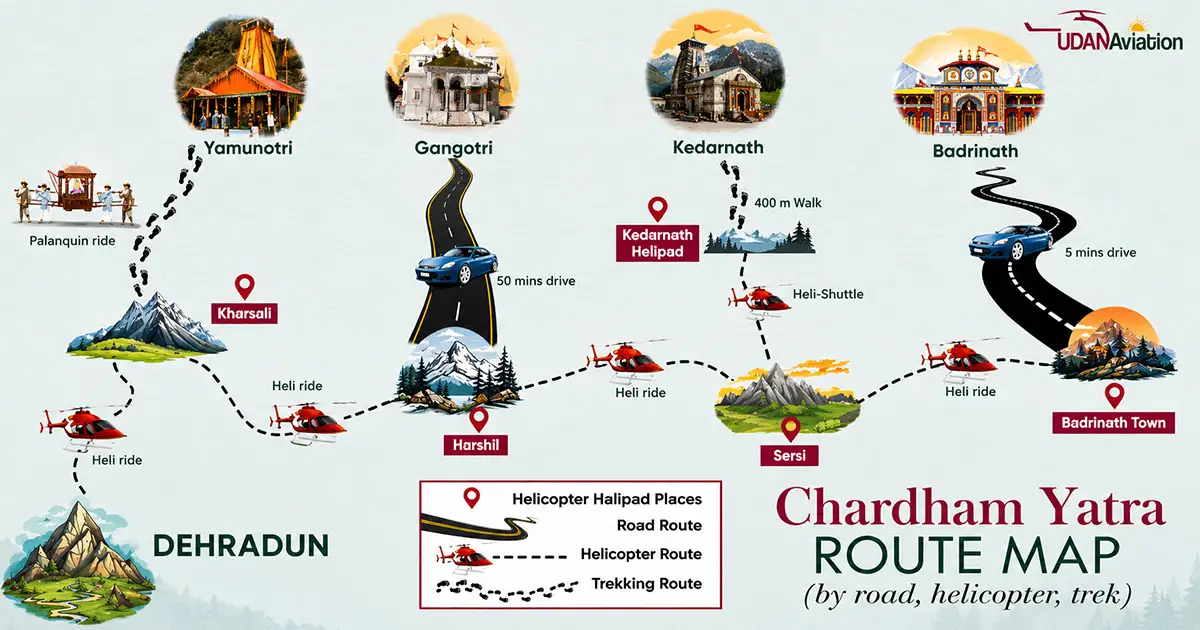
The traditional and geographically correct order is: Yamunotri → Gangotri → Kedarnath → Badrinath. This is the west-to-east sequence and matches the road connectivity and logistics of the Uttarakhand circuit.
Q-11: When do Chardham helicopter bookings open for 2026?
IRCTC HeliYatra 2026 bookings for Kedarnath opened at 6 PM on 11 April 2026 at heliyatra.irctc.co.in. Second-phase bookings (September–October slots) typically open in mid-June. Guptkashi slots sold out within 90 minutes on opening day in 2025.
Conclusion
The best time for your Chardham Yatra depends on what you are optimizing for — crowd avoidance, weather reliability, budget, or a specific experience like the opening or closing ceremonies. There is no universally perfect month, but May and October consistently deliver the most balanced combination of good weather, operational infrastructure, and meaningful darshan.
In 2026, the season opens notably early — 19 April for Yamunotri and Gangotri. Plan and book accordingly. Helicopter slots, GMVN accommodation, and VIP darshan passes all fill weeks before peak dates.
Ready to plan your Chardham Yatra 2026? Contact Udan Aviation for helicopter packages from Dehradun with transparent pricing, senior citizen support, and weather rebooking assistance.