Planning a visit to Hemkund Sahib is not like planning a normal trip. This is a high-altitude Himalayan pilgrimage, sitting at around 15,200 feet, where weather, oxygen levels, physical stamina, and even small timing mistakes can affect your entire experience.
Many people decide their travel dates based only on leave availability or holiday calendars. That works for city trips. But in Hemkund Sahib’s case, choosing the right time can be the difference between a peaceful darshan and a physically exhausting struggle.
This guide is written to help you understand what really happens on the ground — not just what looks good on paper.

Why Timing Matters So Much for Hemkund Sahib
Hemkund Sahib is one of the highest located Gurudwaras in the world. The final 6 km trek from Ghangaria is steep, exposed, and fully dependent on mountain weather.
Here, timing affects:
- Trail safety
- Breathing comfort
- Crowd pressure
- Landslide risk
- Temperature exposure
- Your physical endurance
Even strong and fit travelers can struggle if they arrive during the wrong weather window.
This is why “best time” is not a single date — it’s a carefully chosen window.
When Does Hemkund Sahib Open and Close?
Every year, Hemkund Sahib opens only after snow is cleared from the trekking route. Heavy winter snowfall blocks access for nearly six months.
General Opening Period:
Late May / Early June → Early October
Exact dates vary each year depending on snowfall and weather stability.
- In most years, opening happens between 20 May and 5 June
- Closure usually occurs between late September and early October
Outside this period, the entire region is snowbound and inaccessible.
The Best Time To Visit Hemkund Sahib (Month-Wise Reality)
Instead of giving a generic answer, let’s look at what each phase of the season actually feels like.
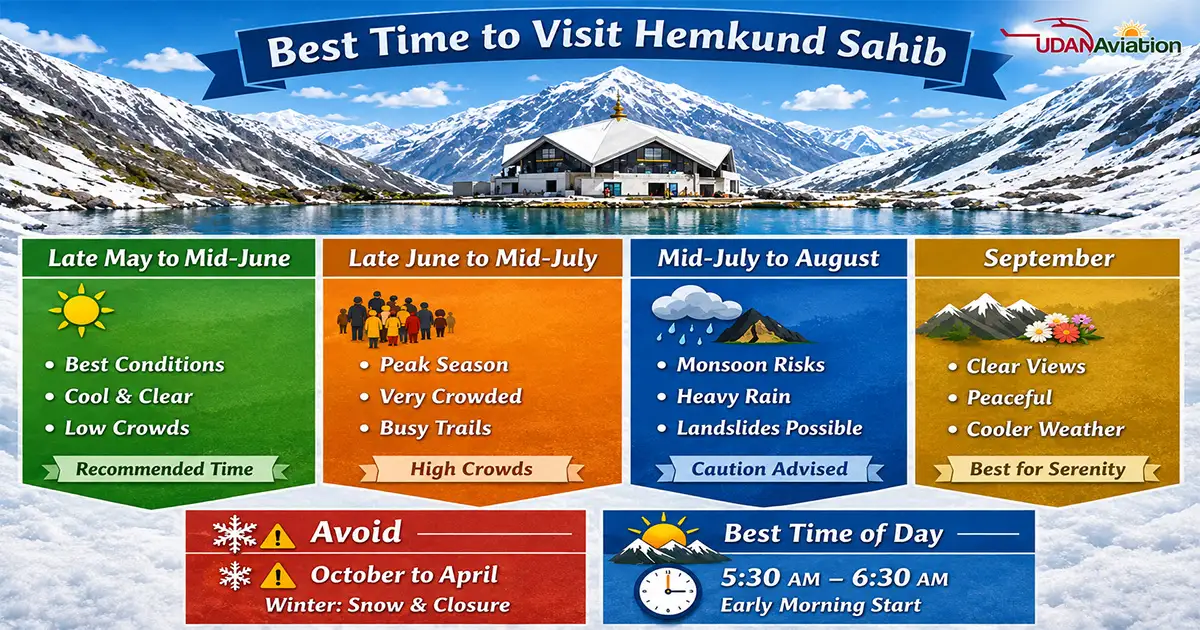
Late May to Mid-June – The Most Balanced & Safest Window
If someone asks me one straight answer, this would be it.
This period offers the best mix of comfort, safety, and manageable crowd levels.
What the experience feels like:
- Cool but pleasant daytime temperatures
- Stable weather on most days
- Clear mountain views
- Snow patches near the top but manageable
Temperature range:
- Day: 8°C to 15°C
- Night: 0°C to 5°C
Why this period works so well:
- Snow has recently melted, so the trail is fresh but safe
- Rainfall has not started yet
- Landslide risk is relatively low
- Trek fatigue feels more manageable
Best for:
- Senior citizens
- Families
- First-time trekkers
- Pilgrims with health concerns
If comfort and safety matter more than adventure, this is your window.
Late June to Mid-July – Good Weather, Heavy Crowds
This is peak pilgrimage season.
On the positive side:
- Pleasant trekking conditions
- Fully operational facilities
- Regular langar and accommodation services
But reality:
- Heavy crowd congestion
- Long queues for darshan
- Congested trek trails
- Accommodation pressure in Ghangaria
This period suits people who don’t mind crowds and prefer well-organized logistics over solitude.
Mid-July to August – Beautiful but Risky (Monsoon Phase)
This is where many people make mistakes.
On social media, this season looks stunning. Lush green valleys, waterfalls everywhere, foggy mountain drama. But behind that beauty lies real risk.
Main challenges:
- Heavy rainfall
- Slippery stone trails
- Landslides on approach roads
- Sudden cloud cover
- Route blockages near Joshimath and Govindghat
During this period, travel delays are common.
If you have a tight return schedule or medical concerns, this is not the safest window.
Who should consider this season:
- Experienced trekkers
- Flexible travelers
- Valley of Flowers visitors
- Adventure-oriented pilgrims
If you travel in monsoon, always keep 2–3 buffer days.
September – Calm, Clear, and Spiritually Rewarding
For many experienced travelers, September is the hidden gem.
After monsoon retreats, the skies open up. Air becomes crisp. Crowds drop significantly.
What makes September special:
- Clear Himalayan views
- Peaceful darshan
- Cleaner trekking trails
- Fresh post-monsoon greenery
Challenges:
- Colder mornings
- Shorter daylight hours
- Early snowfall risk toward end of month
If you seek peace over convenience, September offers a deeply satisfying experience.
Early October – Stunning But Weather-Sensitive
Early October feels magical — autumn colors, crystal clear skies, very few pilgrims.
But weather becomes unpredictable.
Sudden snowfall can lead to immediate route closure, sometimes within hours.
This period is suitable only if:
- You track local weather daily
- You have flexible travel plans
- You are physically fit
Worst Time To Visit Hemkund Sahib
November to April
During winter:
- Heavy snowfall blocks all access routes
- Temperatures drop well below freezing
- Avalanche risk becomes high
- The shrine remains fully closed
No trekking or travel is possible during this period.
Best Time of Day To Start the Trek
This is often overlooked — and often regretted.
Ideal start time from Ghangaria:
Between 5:30 AM and 6:30 AM
Why early starts matter:
- Clearer skies
- Lower wind speeds
- Reduced rainfall chances
- Safer descent before afternoon weather shifts
Most weather disturbances happen after 1 PM. Reaching the top early gives you time buffer and safety margin.
Best Time Based on Traveler Type
| Traveler Profile | Best Time |
|---|---|
| Senior citizens | Late May – Early June |
| First-time trekkers | Early June |
| Spiritual seekers | September |
| Photographers | September |
| Nature lovers (Valley of Flowers combo) | Late July – August |
| Budget travelers | Late June & September |
Combining Hemkund Sahib with Valley of Flowers – Timing Reality
Many travelers combine both destinations.
- Best flower bloom: Late July – Mid August
- Best balance of safety & scenery: Early September
However, during peak bloom, monsoon risks remain high, so planning flexibility becomes essential.
Altitude Reality – What Most First-Timers Underestimate
At 15,200 feet:
- Oxygen availability drops significantly
- Breathing becomes heavier
- Fatigue sets in quickly
- Mild headache and nausea are common
This is not dangerous for most healthy individuals, but slow pacing, hydration, and proper clothing become essential.
This is also why early-season timing helps, as cooler temperatures reduce physical stress.
10 Honest FAQs Based on Real Traveler Doubts
1. Which is the safest month to visit Hemkund Sahib?
June offers the best mix of weather stability, safety, and physical comfort.
2. Is July dangerous?
Not dangerous, but riskier due to monsoon rainfall and landslides.
3. Can senior citizens do this trek?
Yes, with slow pacing and early-season travel (late May–early June).
4. Is September colder than June?
Yes, mornings and evenings are noticeably colder.
5. When does snowfall usually begin?
Light snowfall may begin late September or early October.
6. Is snow visible in summer?
Yes, especially near the Gurudwara, even in June.
7. Is helicopter service reliable?
It depends completely on weather clearance and is not guaranteed.
8. How crowded does Hemkund Sahib get?
Peak crowds occur mid-June to mid-July.
9. Is the trek suitable for beginners?
Yes, if done slowly and during favorable weather windows.
10. Can children do this trek?
Children above 10–12 years with good stamina can manage in early June or September.
Final Advice – Choose Comfort Over Calendar
If your goal is safe darshan, physical comfort, and spiritual peace, choose:
Late May to Mid-June
If your priority is calm surroundings and Himalayan beauty, choose:
September
Avoid planning based only on holidays. Mountain timing works differently.
Here, patience, preparation, and season selection matter more than speed.
Suggested Post: