A realistic, season‑by‑season look at what to expect — and how temperature and weather affect your pilgrimage planning.
Vaishno Devi sits high in the Trikuta Mountains — the Bhawan (holy shrine) is around 5,200 ft (∼1,580 m) above sea level, while its base town Katra lies lower. That elevation makes a significant difference in temperature compared with the plains: it’s cooler, often much cooler at night, and weather can change quickly.
Why Temperature Matters on the Vaishno Devi Yatra
The Vaishno Devi pilgrimage isn’t just about darshan. Many pilgrims walk a 13 km trek from Katra to the Bhawan. Weather and temperature affect:
- Comfort and safety on the trek
- Risk of rain‑related problems (slippery paths, landslides)
- Packing strategy (what clothes to bring)
- Crowd patterns (some seasons see massive pilgrim influxes)
Conditions vary sharply between Katra and the Bhawan — as much as 5–10 °C in the same season — so don’t rely only on Katra temperatures when planning gear.
Seasonal Temperature Overview at Vaishno Devi
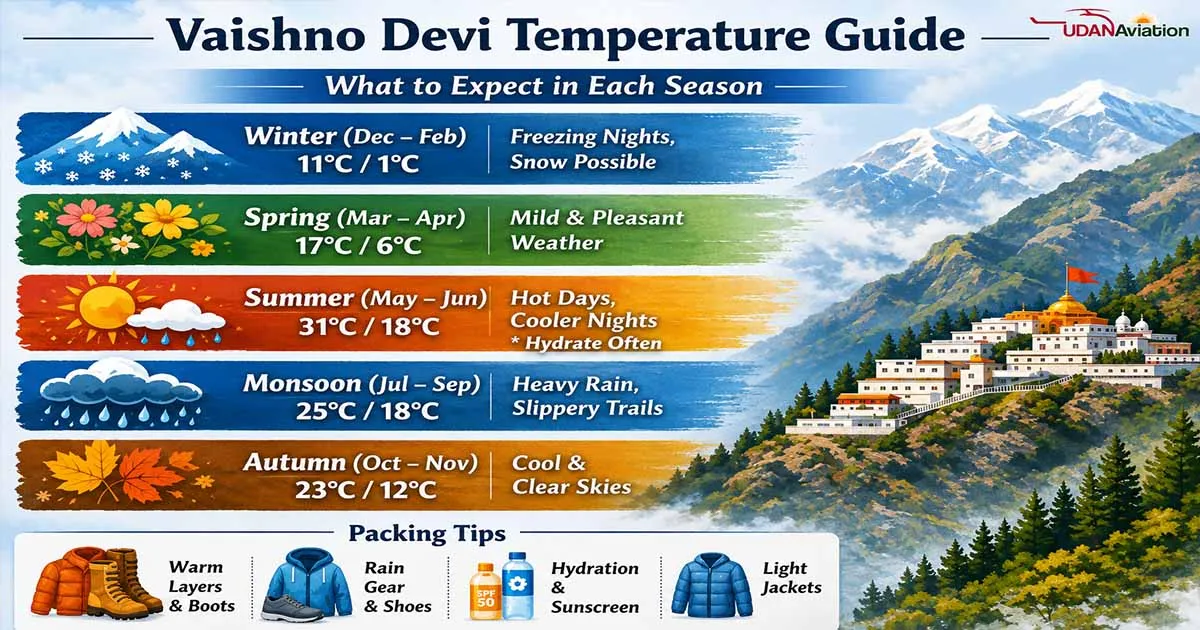
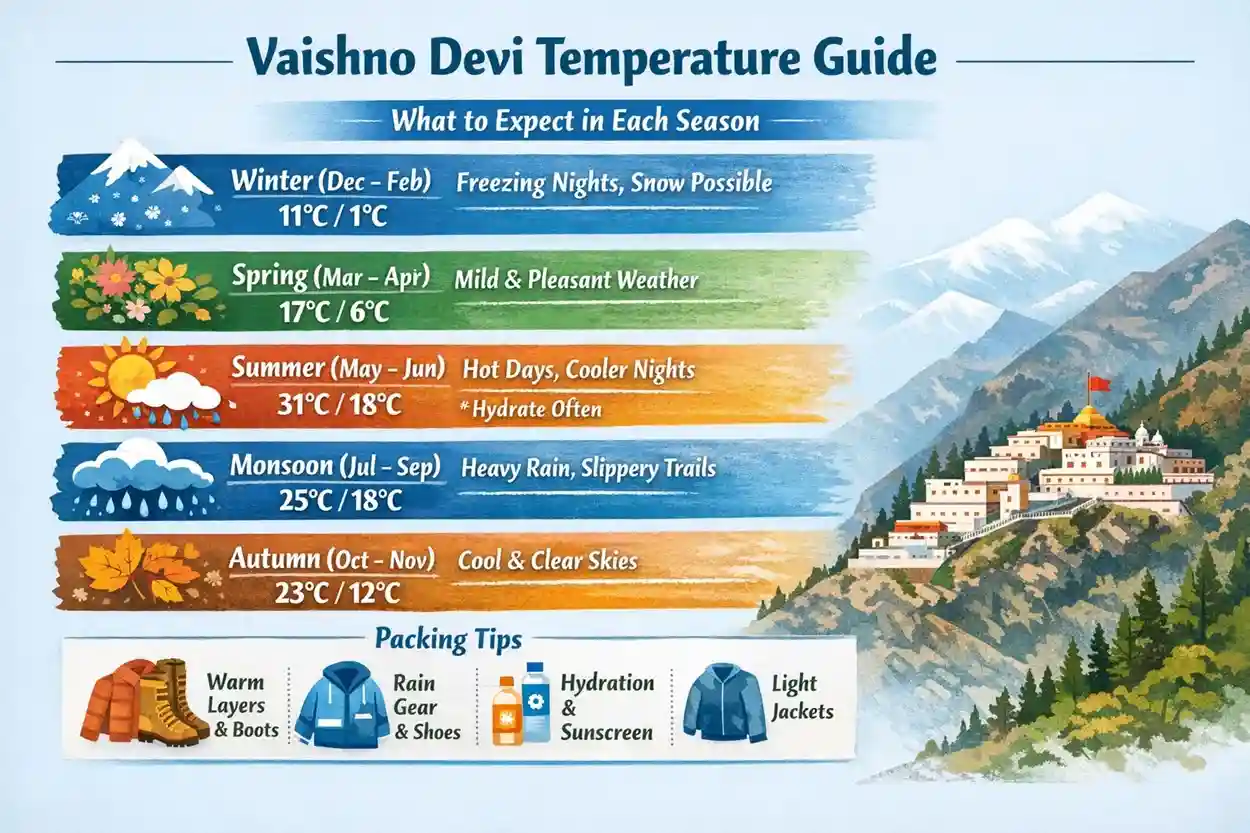
Below is a month‑by‑month snapshot of typical temperatures near Vaishno Devi Bhawan (higher elevation). These are realistic ranges seen in local weather summaries:
| Month | Approx. High | Approx. Low | Typical Weather |
|---|---|---|---|
| Jan | 11 °C | 1 °C | Very cold, occasional snowfall |
| Feb | 15 °C | 4 °C | Still cold, winter conditions |
| Mar | 17 °C | 6 °C | Cooler early spring |
| Apr | 22 °C | 10 °C | Pleasant spring |
| May | 27 °C | 14 °C | Warm daytime, cool nights |
| Jun | 31 °C | 18 °C | Warm summer, hydrate well |
| Jul | 25 °C | 18 °C | Monsoon rains start |
| Aug | 24 °C | 17 °C | Wet, humid monsoon |
| Sep | 25 °C | 16 °C | Post‑monsoon pleasant |
| Oct | 23 °C | 12 °C | Crisp, comfortable autumn |
| Nov | 17 °C | 8 °C | Cooler, pre‑winter |
| Dec | 13 °C | 3 °C | Cold, snowy in upper reaches |
These figures represent typical conditions reported over several years. Actual daily values can vary — especially with changing monsoon intensity or winter snowfall.
What to Expect Each Season
1. Winter (Dec – Feb): Cold and Snowy
In winter, daytime temperatures often hover just above freezing and nights dip close to 0 °C or below. The Bhawan area can see snowfall, and trekking paths can be icy.
Reality check:
- Snow isn’t just scenic — it can slow trekking and affect access, especially in heavy winter systems. Authorities sometimes adjust facilities in response to weather.
- Even if you’re from a cool region, temperatures in winter here are harsher than in lower‑lying cities.
Clothing tips: heavy thermal layers, waterproof footwear, gloves, warm headgear.
2. Spring (Mar – Apr): Warming Up
Spring brings a welcome rise in temperature and clear days. Night temperatures are still cool but much more comfortable than deep winter.
This is often considered one of the most comfortable seasons, with pleasant trekking and fewer weather complications.
Clothing tips: light layers for day; a warm layer for mornings/evenings.
3. Summer (May – Jun): Warm Days, Cool Nights
Summer at Vaishno Devi can surprise many first‑time pilgrims. Days can reach 30 °C+, especially at lower elevations, though it’s cooler compared with plains.
Real considerations:
- Trekking in daytime heat means you should hydrate consistently and avoid the midday sun.
- Higher up (toward the shrine), there’s a noticeable drop in temperature — so don’t drop all layers.
Clothing tips: cotton for day; light fleece or shawl for early morning/evening.
4. Monsoon (Jul – Sep): Wet Conditions
The temperature itself stays moderate (~20–25 °C), but rain and humidity define this period. Heavy rain can lead to muddy trails, slippery paths and delays in transportation.
On‑the‑ground reality:
- The soil saturation and runoff after intense monsoon systems can disrupt treks or pause pilgrimage services temporarily.
- Recent monsoon patterns in northern India have broken historical rainfall records, increasing such risks.
Clothing tips: waterproof layers, sturdy slip‑resistant footwear, rain gear.
5. Autumn (Oct – Nov): Clear and Comfortable
Autumn strikes a balance: clear skies, rising sunshine, and temperatures that stay cool but not cold. This makes trekking easier and views clearer.
Often this season sees festivals like Navratri, which affects crowd sizes — something to factor into planning.
Clothing tips: moderate layers; windproof jacket for evenings.
Practical Packing Based on Temperature
Winter visit: Woollens, thermals, waterproof boots, gloves.
Spring/Autumn: Layered shirts, light jacket, comfortable trekking shoes.
Summer: Light cottons, sunscreen, hydration gear; a light fleece if ascending further.
Monsoon: Raincoat/umbrella, water‑resistant footwear, extra socks.
Temperature Misconceptions Pilgrims Often Have
- “It’s always cold because it’s in the hills” – Not true: summer days can feel quite warm at lower elevations, though nights still cool.
- “It rarely snows” – Snow is not rare in peak winter and happens frequently at higher altitudes.
- “Monsoon only adds greenery” – The season is beautiful but brings safety considerations (slippery routes, landslide risk).
Final Thoughts Before You Go
Weather and temperature aren’t just trivia — they shape the pilgrimage experience: how safely you can trek, whether you enjoy the views comfortably, and how you should prepare physically and logistically.
There’s no single “perfect” time: each season has trade‑offs. What you choose should reflect your weather tolerance, physical preparedness, and comfort preferences.
Also Reads on