In India, medical emergencies do not unfold inside controlled systems. They happen on crowded highways, in narrow village lanes, in mountain towns cut off by landslides, and in homes where the nearest advanced hospital is hundreds of kilometres away.
When something serious happens — a heart attack, a stroke, a major accident — the problem is not only medical. It becomes logistical, geographical, and financial at the same time.
For many families, the hardest part is not treatment. It is reaching the right place in time.
This is where air ambulance services enter the picture. Quietly. Often unnoticed. Sometimes misunderstood. And frequently unaffordable.
The Basic Reality: Distance Is India’s Biggest Medical Risk
India’s healthcare system is uneven. A handful of large cities have world-class hospitals. Most of the country does not.
Outside metros, advanced facilities thin out quickly. Cardiac catheter labs, trauma centres, neurosurgery units, and neonatal ICUs remain concentrated in limited urban pockets.
Now combine that with India’s geography.
-
Long road travel times
-
Traffic congestion in cities
-
Poor connectivity in rural belts
-
Mountain terrain in Himalayan states
-
Seasonal isolation due to floods, snow, and landslides
For critical patients, these factors do not just cause delay. They change medical outcomes permanently.
When doctors speak of the “golden hour,” they are not using a poetic phrase. They mean that after a certain window, survival and recovery drop sharply.
For large parts of India, that window closes before the patient even reaches the highway.
Why Road Ambulances Alone Cannot Solve This Problem
Road ambulances remain the backbone of emergency care. They save countless lives every day. But they have hard limitations that technology cannot fix.
In metro cities, traffic congestion routinely turns 20-minute drives into 90-minute journeys. In rural areas, road conditions slow even high-speed vehicles. In hilly terrain, ambulance travel can take half a day.
In stroke cases, for example, clot-busting drugs must often be given within a few hours. In cardiac arrests, delays of even 30 minutes drastically reduce survival probability.
This is why air ambulances are not luxury transport. They are time-correction systems.
They compress long, unpredictable journeys into controlled medical transfers.
What an Air Ambulance Actually Does (Beyond Just Flying)
Many people imagine air ambulances as fast planes. That is only half the story.
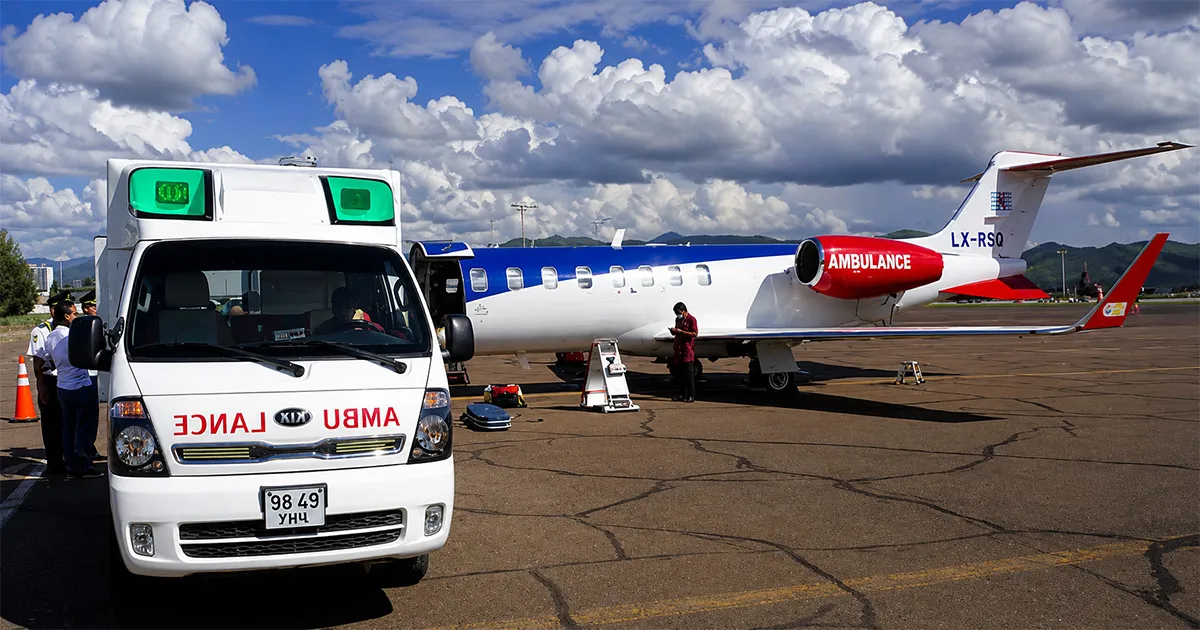
A proper air ambulance functions like a flying ICU.
Inside, you typically find:
-
Continuous cardiac monitoring
-
Ventilators for breathing support
-
Emergency drugs
-
Oxygen systems
-
Infusion pumps
-
Trained critical-care doctors and paramedics
Patients are not simply transported. They are treated during transit.
This matters because critically ill patients often deteriorate mid-journey. Without ICU-level care, many do not survive long transfers.
Where Air Ambulances Become Truly Critical
Air ambulance services are not required for every emergency. But in some situations, they become nearly irreplaceable.
Major Road Accidents
Highway trauma cases frequently involve internal bleeding, head injury, and spinal damage. Local hospitals can stabilise, but definitive treatment requires tertiary trauma centres.
Every hour of delay worsens survival and neurological outcome.
Heart Attacks
Primary angioplasty needs rapid access to cardiac catheter labs. Smaller towns often lack these facilities. Air evacuation becomes the fastest route to advanced cardiac care.
Stroke
Modern stroke treatment has narrow time windows. Delayed transfer often results in permanent paralysis or speech loss.
Newborn Emergencies
Critically ill newborns require specialised NICU environments. Many district hospitals simply cannot provide this. Neonatal air transfer saves infants who otherwise would not survive long journeys.
High-Altitude and Remote Region Illness
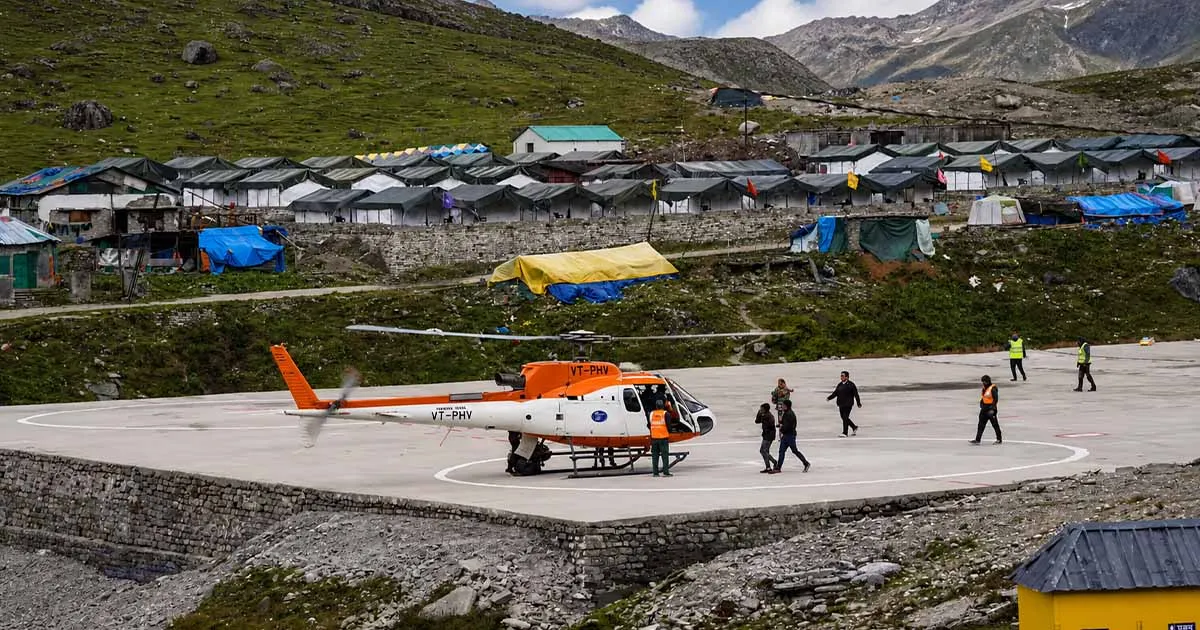
In Uttarakhand, Himachal Pradesh, Jammu & Kashmir, and the Northeast, helicopter ambulances are often the only realistic emergency evacuation option.
Pilgrimage, Tourism & Seasonal Medical Risk
India’s pilgrimage circuits add a unique layer to emergency aviation demand.
Places like Kedarnath, Badrinath, Vaishno Devi, Amarnath, and Kailash Mansarovar see:
-
High altitude sickness
-
Cardiac events
-
Falls and injuries
-
Dehydration and respiratory distress
These regions lack large hospitals. Helicopter evacuation becomes essential, not optional.
Many of these rescues never make headlines. But they quietly prevent fatalities every season.
Disaster Response: When Air Ambulances Become National Lifelines
During floods, cyclones, landslides, and earthquakes, road connectivity collapses.
In such moments, air ambulances:
-
Evacuate the critically injured
-
Deliver medical supplies
-
Transport doctors and relief teams
-
Support triage operations
During disasters, air medical services shift from individual patient care to population-level life-saving infrastructure.
The Cost Reality: Why Access Remains Limited
Despite their value, air ambulances remain out of reach for most Indian families.
Costs typically range from a few lakhs to well over ten lakhs, depending on distance, aircraft type, medical staffing, and urgency.
Insurance coverage is inconsistent. Government-funded services exist in limited states and mostly during disasters.
This creates a painful truth:
Medical urgency often collides with financial capacity.
Families face impossible decisions — choosing between debt, selling assets, or risking delay.
This is perhaps the biggest ethical challenge surrounding air ambulance services in India.
Why India Needs Public Air Medical Infrastructure
India does not need more private operators alone. It needs a coordinated national air medical system.
Such a framework would:
-
Integrate air ambulances with government hospitals
-
Link emergency call networks
-
Standardise medical protocols
-
Expand insurance reimbursement
-
Create disaster-ready aviation medical corridors
Without this, air ambulances remain life-saving but socially unequal.
The Human Side: What Families Actually Experience
Talk to families who have used air ambulance services and a pattern emerges:
-
Confusion during crisis
-
Difficulty arranging flights quickly
-
Unclear pricing
-
Stress of financial decisions
-
Emotional exhaustion
For them, air ambulances are not luxury tools. They are last hopes.
This emotional reality rarely appears in official healthcare planning.
Who Truly Benefits From Air Ambulance Services?
-
Accident victims in remote regions
-
Cardiac and stroke patients
-
Critically ill newborns
-
Disaster-affected populations
-
High-altitude travelers and pilgrims
When Air Ambulances Should Not Be Used
Air ambulances are not appropriate for:
-
Stable patients
-
Routine hospital transfers
-
Non-critical intercity travel
-
Comfort-based medical transport
Overuse inflates costs and strains limited emergency aviation resources.
The Road Ahead: Growth With Responsibility
Demand for air ambulance services will rise as:
-
Highway networks expand
-
Tourism increases
-
Climate-related disasters grow
-
Chronic illness rises
But without policy reform, insurance integration, and public investment, this growth will remain unequally distributed.
India must decide whether air ambulances remain premium services or become public emergency infrastructure.
Real Questions People Ask (FAQs)
1. Are air ambulances safe?
Yes, when operated by trained crews and maintained aircraft.
2. Can ventilated ICU patients be transferred by air?
Yes, with proper medical configuration.
3. Are helicopters safer than planes in mountains?
Generally, yes, due to landing flexibility.
4. Why are air ambulances so expensive?
Aircraft operation, medical staff, fuel, airport fees, and standby readiness all add cost.
5. Do government hospitals provide air ambulance services?
Limited state programs exist, mostly during disasters.
6. Is insurance coverage improving?
Slowly, but still inconsistent.
7. Can air ambulances fly at night?
Some can, but regulatory and safety constraints apply.
8. Are family members allowed onboard?
Usually one attendant, subject to space and safety.
9. Is international evacuation possible?
Yes, but significantly costlier.
10. Will costs reduce in the future?
Only if public funding and insurance integration expand.
Also Read: